Topic unknown.
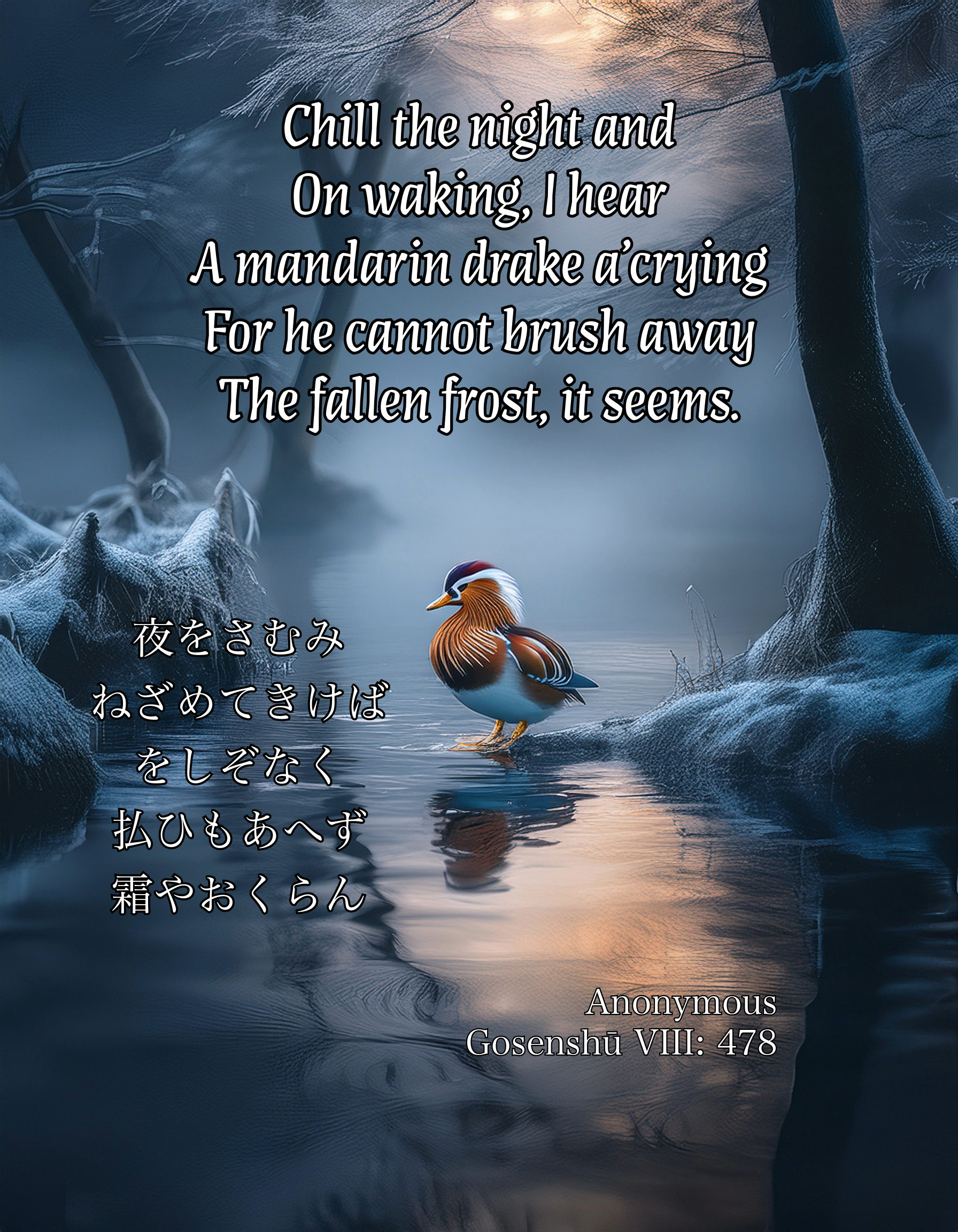
夜をさむみねざめてきけばをしぞなく払ひもあへず霜やおくらん
| yo wo samumi nezamete kikeba wosi zo naku FaraFi mo aFezu simo ya okuran | Chill the night and On waking, I hear A mandarin drake a’crying For he cannot brush away The fallen frost, it seems. |
Anonymous
Left
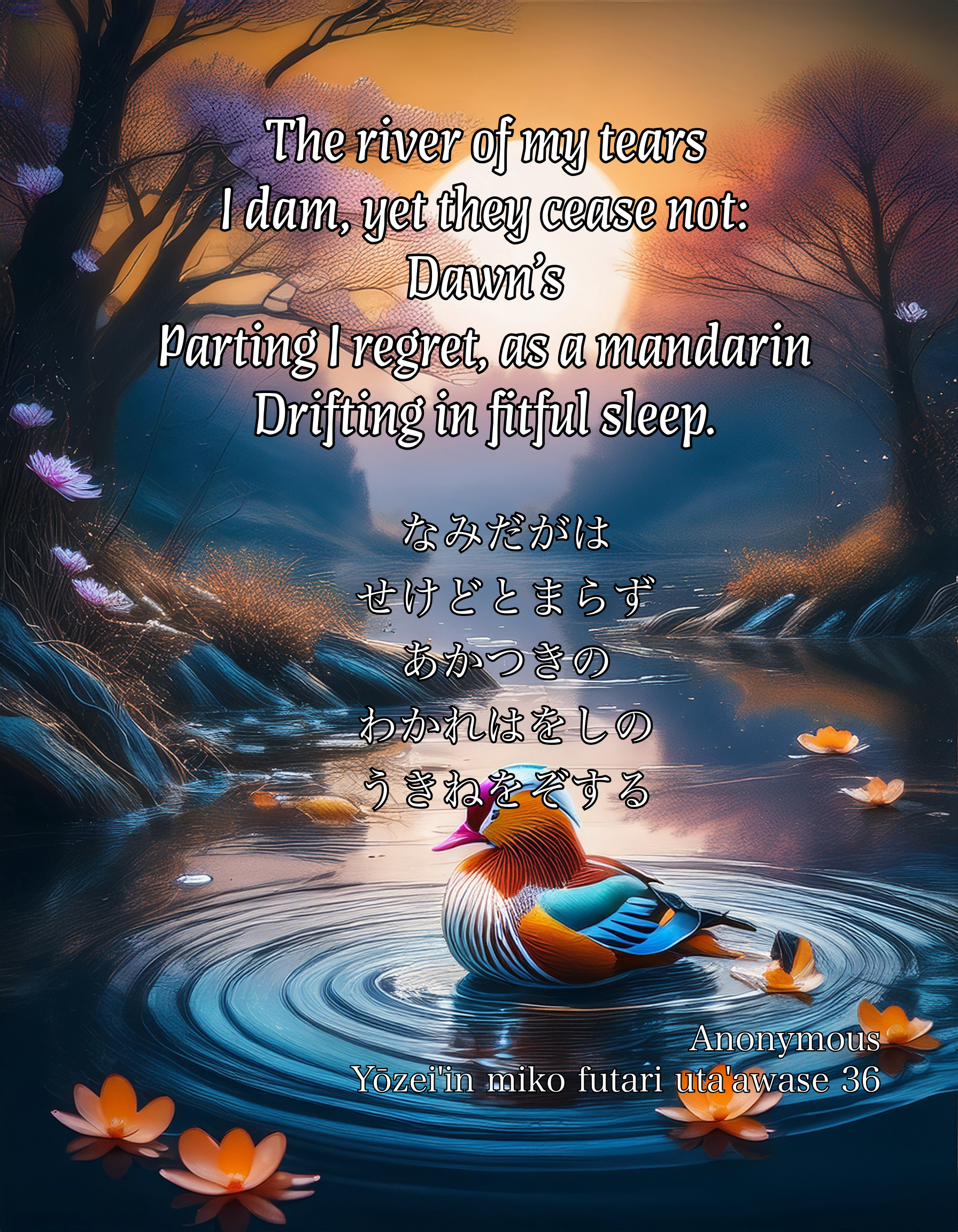
なみだがはせけどとまらずあかつきのわかれはをしのうきねをぞする
| namidagawa sekedo tomarazu akatsuki no wakare wa oshi no ukine o zo suru | The river of my tears I dam, yet they cease not: Dawn’s Parting I regret, as a mandarin Drifting in fitful sleep. |
36
Right
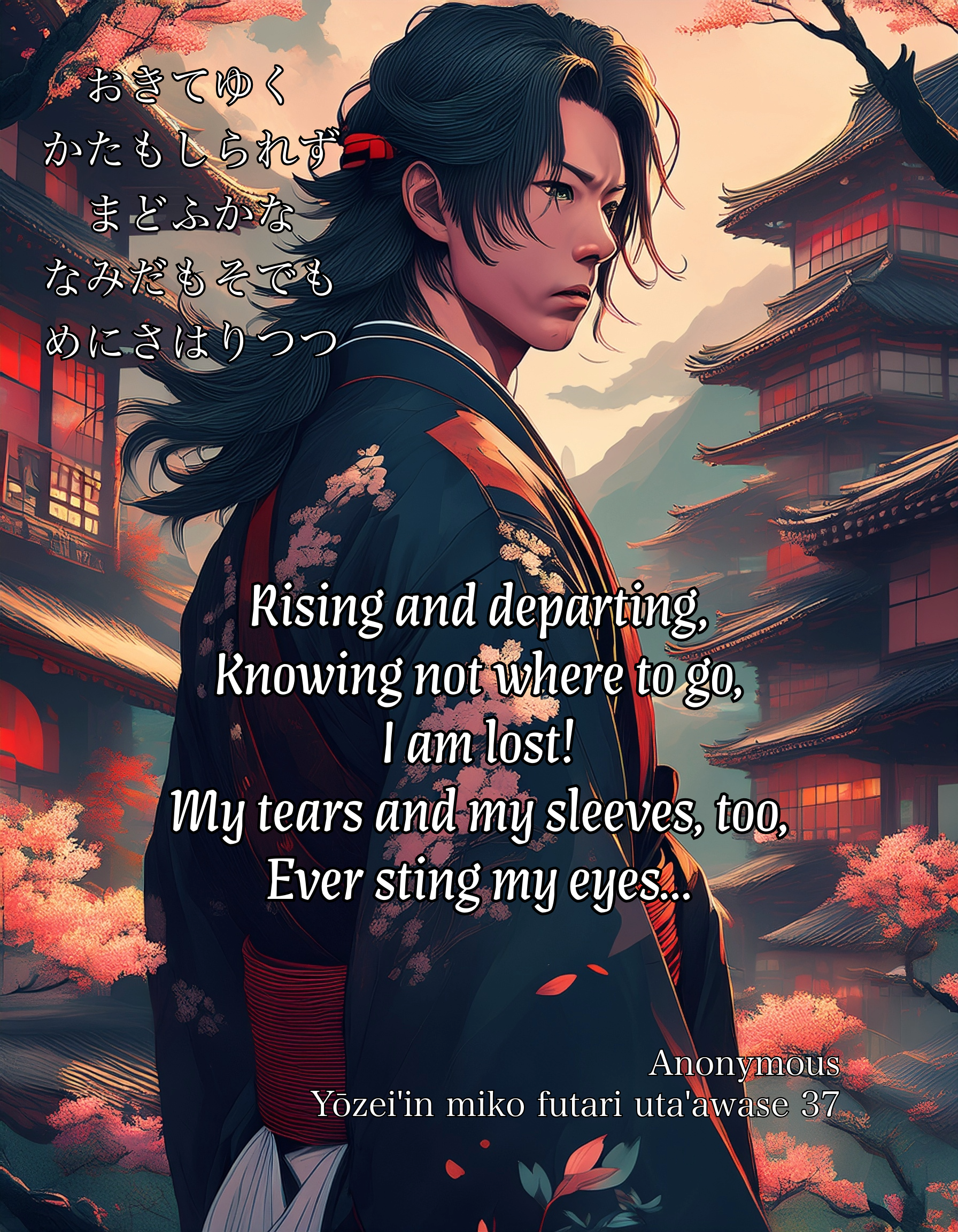
おきてゆくかたもしられずまどふかななみだもそでもめにさはりつつ
| okiteyuku kata mo shirarezu madou kana namida mo sode mo me ni sawaritsutsu | Rising and departing, Knowing not where to go, I am lost! My tears and my sleeves, too, Ever sting my eyes… |
37
Partings at Dawn
Left
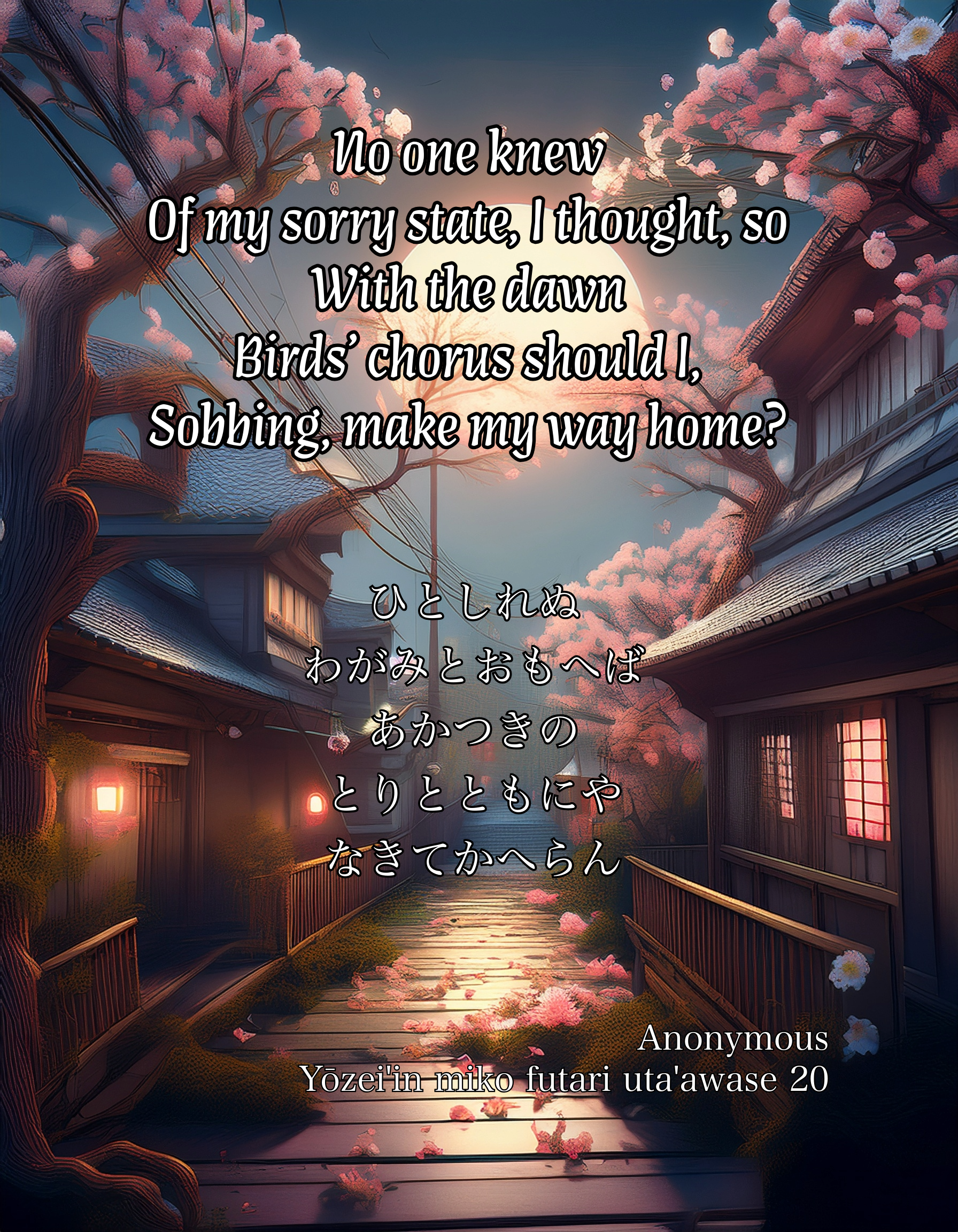
ひとしれぬわがみとおもへばあかつきのとりとともにやなきてかへらん
| hito shirenu wa ga mi to omoeba akatsuki no tori to tomo ni ya nakite kaeran | No one knew Of my sorry state, I thought, so With the dawn Birds’ chorus should I, Sobbing, make my way home? |
20
Right
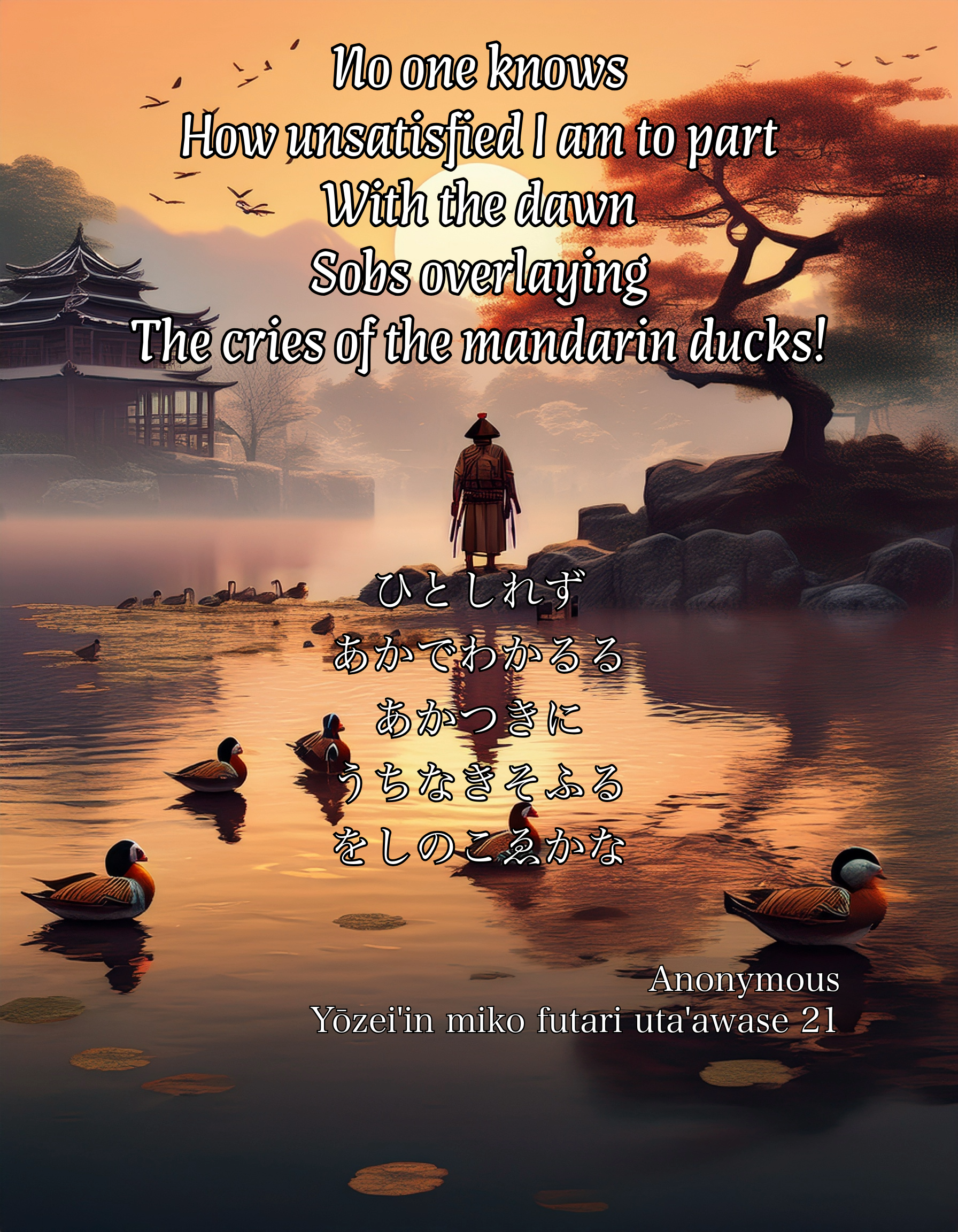
ひとしれずあかでわかるるあかつきにうちなきそふるをしのこゑかな
| hito shirezu akade wakaruru akatsuki ni uchinaki souru oshi no koe kana | No one knows How unsatisfied I am to part With the dawn Sobs overlaying The cries of the mandarin ducks! |
21
Left
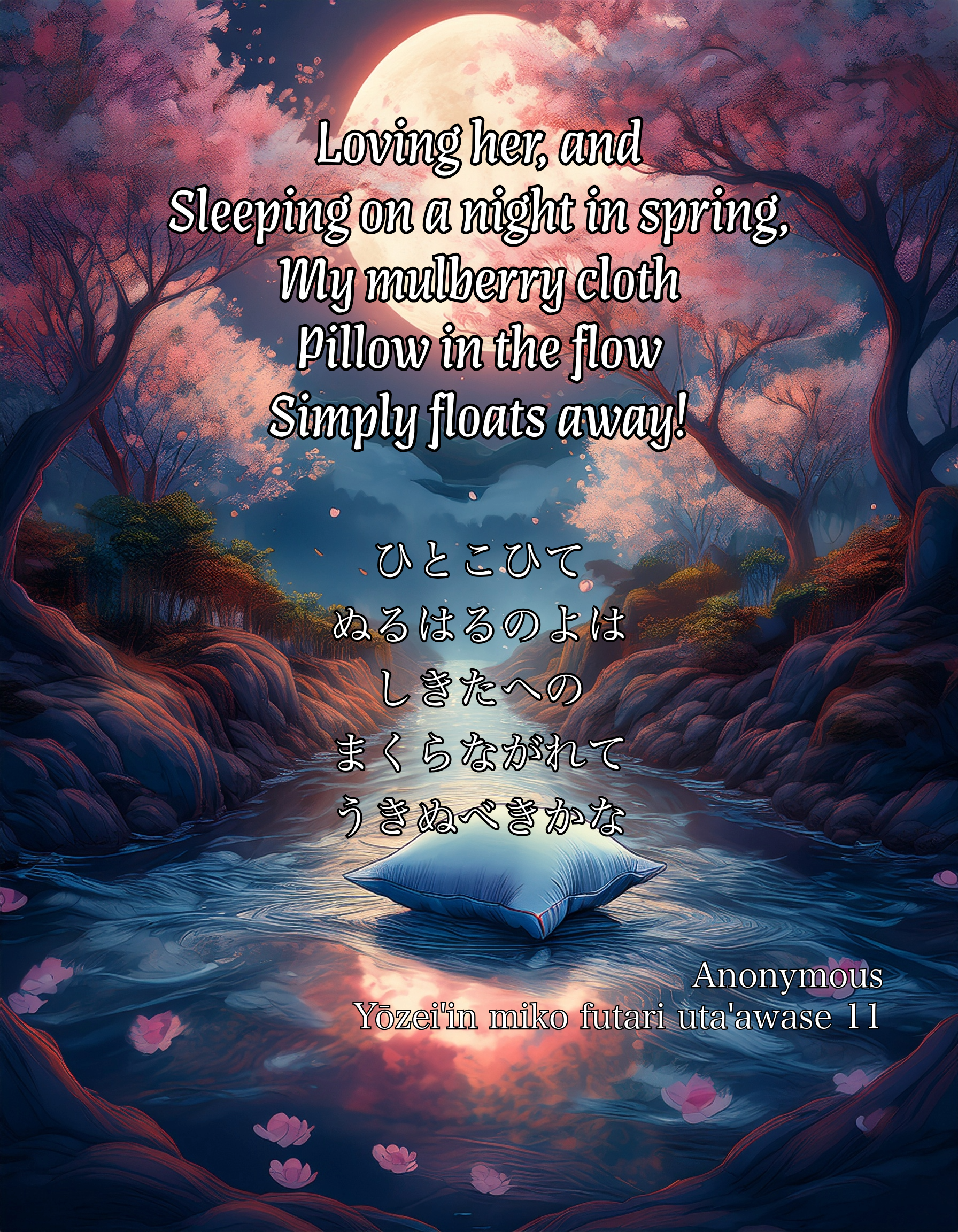
ひとこひてぬるはるのよはしきたへのまくらながれてうきぬべきかな
| hito koite nuru haru no yo wa shikitae no makura nagarete ukinubeki kana | Loving her, and Sleeping on a night in spring, My mulberry cloth Pillow in the flow Simply floats away! |
11
Right
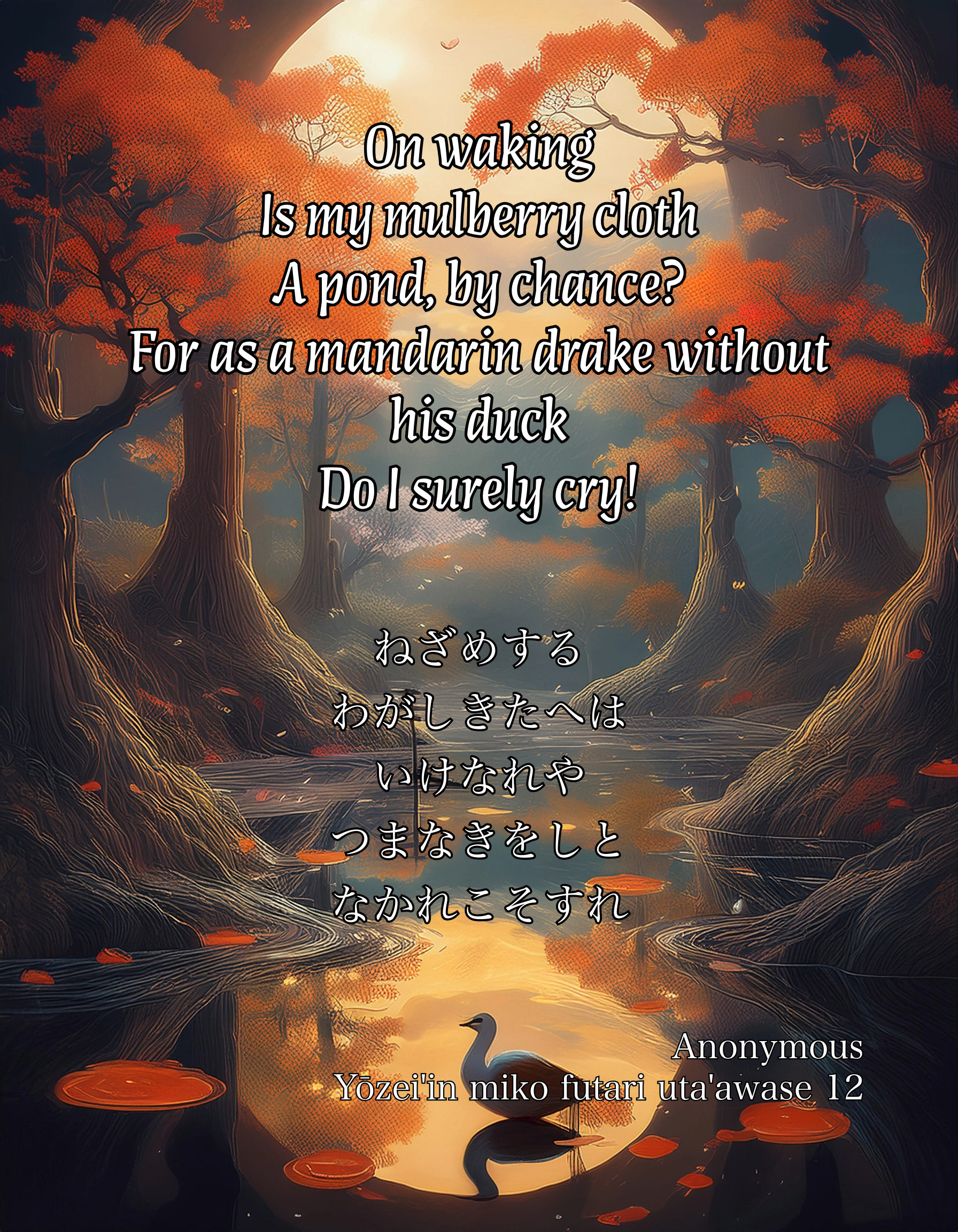
ねざめするわがしきたへはいけなれやつまなきをしとなかれこそすれ
| nezamesuru wa ga shikitae wa ike nare ya tsuma naki oshi to nakare koso sure | On waking Is my mulberry cloth A pond, by chance? For as a mandarin drake without his duck Do I surely cry! |
12
Left.
憂しつらし安積の沼の草の名よかりにも深き縁は結ばで
| ushi tsurashi asaka no numa no kusa no na yo kari ni mo fukaki en wa musubade |
How cruel and cold! At Asaka Marsh The once seen reeds do grow; Briefly, a deep Bond will not be made. |
645
Right.
かゝりける姿の池の鴛の聲聞きては袖の濡れし數かは
| kakarikeru sugata no ike no oshi no koe kikite wa sode no nureshi kazu ka wa |
Such a Form! On Sugata Pond The loving mandarin duck calls I hear and my sleeves: Drenched how many times? |
646
Neither team has any criticisms this round.
Shunzei’s judgement: ‘The Left’s ‘At Asaka Marsh’ (asaka no numa) and the Right’s ‘On Sugata Pond the loving mandarin duck calls’ (sugata no ike no oshi no koe) are both tasteful in diction [yū no kotoba ni wa haberu], but beginning with ‘How cruel and cold!’ (ushi tsurashi) sounds like the poet is writing a love letter, and this is overly informal for a poetry competition [uta’awase ni wa kegen naru yō ni ya haberan]. ‘On Sugata Pond the loving mandarin duck calls’ is charming, but why did the poet not continue with ‘I did hear and my sleeves’ (kikishi wa sode no)? In any case, this round neither poem is markedly superior to the other.
Left.
色變る鴛鴦の毛衣今朝見ずは降るとも知らじ秋の露霜
| iro kawaru oshi no kegoromo kesa mizu wa furu tomo shiraji aki no tsuyujimo |
Colours changing on The mandarin duckdown: If I see it not this morning, I’ll not know that has fallen: Autumn’s frosty dew! |
459
Right.
霜さゆる蓬が下のきりぎりす聲も枯野に成やしぬらん
| shimo sayuru yomogi ga shita no kirigirisu koe mo kareno ni nari ya shinuran |
Frozen by frost, Beneath the tangled mugwort Has the cricket’s Chirp wearied as the withered fields Become? |
460
The Right say, ‘It sounds as if the Left cannot see frost, unless it’s on a mandarin duck’s down!’
The Left respond, ‘There is the poem ‘the down-clad ducks come to my mind’ (kamo no uwage o omoi koso yare). If one composes a poem about one thing, that’s what one is composing about. As for what the Right have to say in their poem, if one is listening to a cricket’s chirp, how can it be withering away? Dubious! [fushin]’
Shunzei’s judgement: I must say I am doubtful myself about saying frosty dewfall changes the colour of ‘mandarin duckdown’ (oshi no kegoromo). In the Right’s poem, saying, ‘the cricket’s chirp’ (kirigirisu no koe) ‘the withered fields become’ (kareno ni nari ya shinuran) sounds as if one cannot hear it at all. The Left’s use of ‘dew’ (tsuyu), too, seems pointless. The Right has an elegant [yū naru] initial section, but the diction in the final section is dubious [shūku no kotoba fushin ni kikoyu]. I make the round a tie.