Partings at Dawn
Left
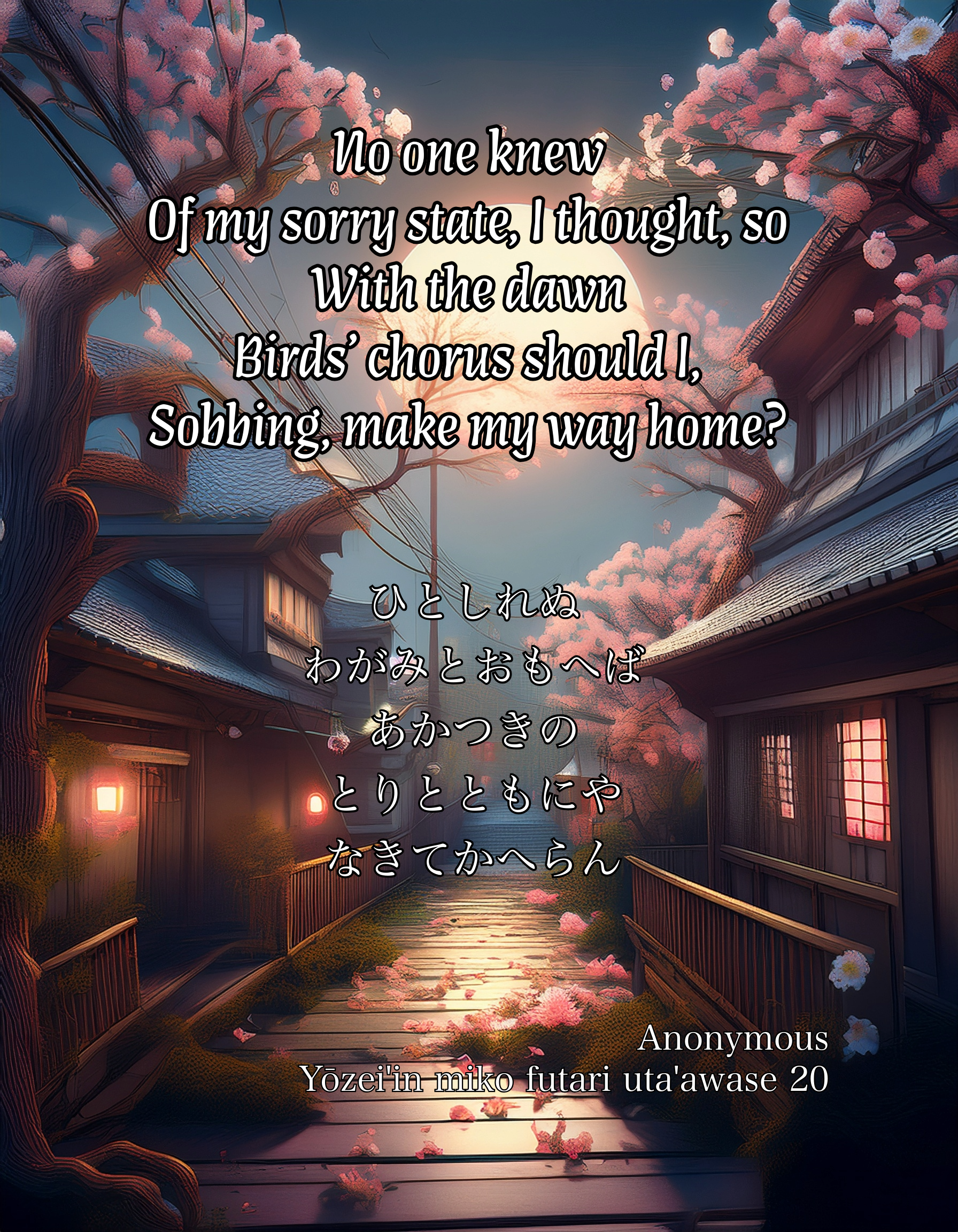
ひとしれぬわがみとおもへばあかつきのとりとともにやなきてかへらん
hito shirenu wa ga mi to omoeba akatsuki no tori to tomo ni ya nakite kaeran No one knew
20
Right
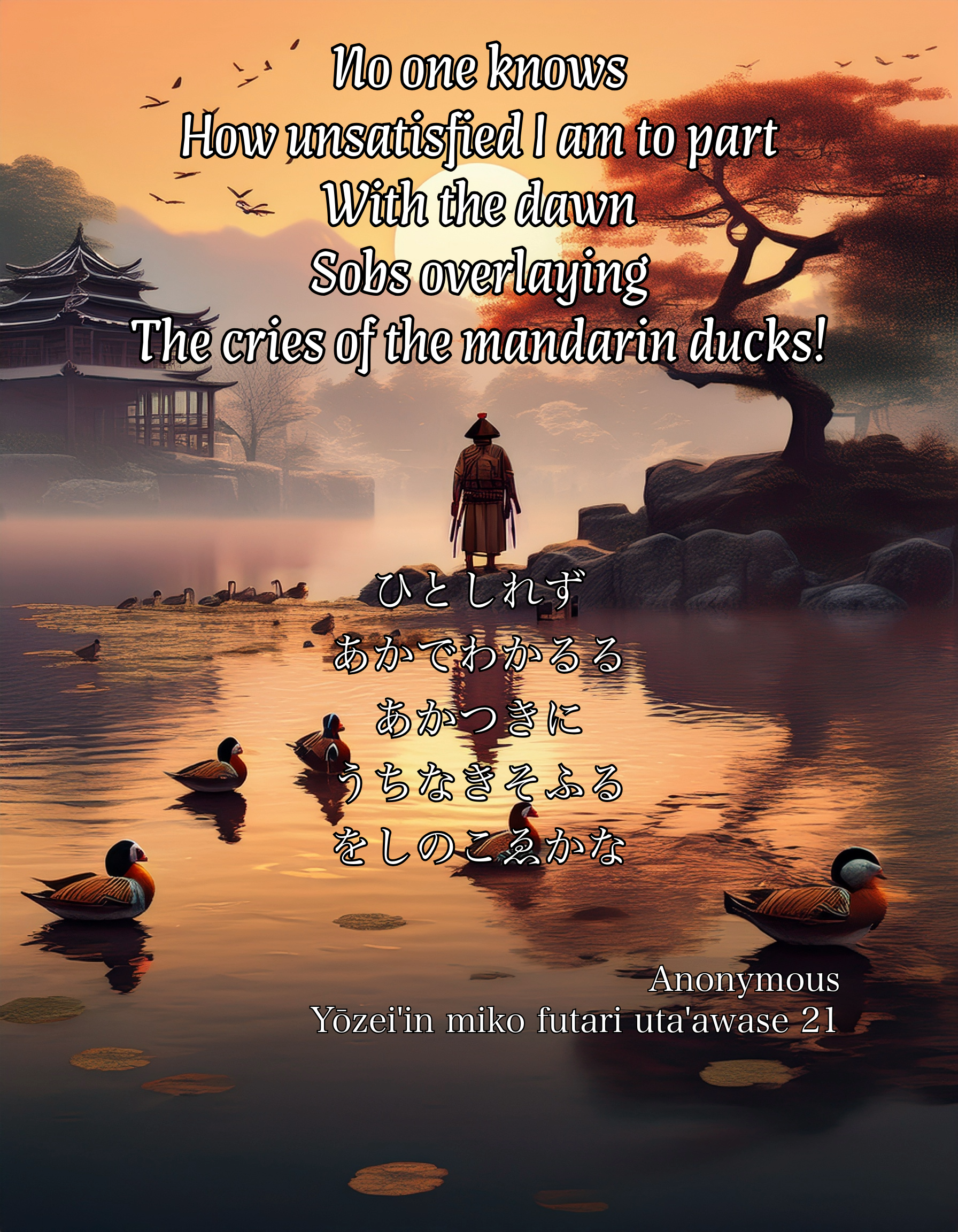
ひとしれずあかでわかるるあかつきにうちなきそふるをしのこゑかな
hito shirezu akade wakaruru akatsuki ni uchinaki souru oshi no koe kana No one knows
21
Composed on the conception of love, when he presented a hundred poem sequence during the reign of former emperor Horikawa.
ひとり寝る我にて知りぬ池水につがはぬ鴛の思ふ心を
hitori nuru Sleeping alone,
Major Counsellor Kinzane
Mandarin Ducks 鴛鴦
夜とともにおもふことなきをし鳥やかげとならびの池にすむらん
yo to tomo ni With night’s fall
Daishin
Mandarin Ducks 鴛鴦
みさびゐぬかがみの池にすむをしはみづからかげをならべてぞみる
misabi inu A rust-red stained
Higo
Mandarin Ducks 鴛鴦
山河にともなきをしはかげをみてひとつがひある心ちすらしも
yamakawa ni In a mountain stream
Kanemasa
Mandarin Ducks 鴛鴦
冬さむみはだれしもふるさ夜なかにつがはぬをしの声ぞかなしき
fuyu samumi In winter’s chill
Tadafusa
Mandarin Ducks 鴛鴦
をし鳥もくぐる岩ねのうす氷今朝やうは毛にとぢかさぬらん
oshidori mo The mandarins do
Toshiyori
Mandarin Ducks 鴛鴦
夜をさむみ岩波たかき山川につがはぬをしのすだくなるかな
yo o samumi On chilly nights, when
Nakazane
Mandarin Ducks 鴛鴦
をし烏のつたふ岩ねに波かけてうきふしつみぬ身をぞ恨むる
oshidori no Mandarin ducks
Akinaka
Left.
憂しつらし安積の沼の草の名よかりにも深き縁は結ばで
ushi tsurashi
How cruel and cold!
Lord Sada’ie .
645
Right.
かゝりける姿の池の鴛の聲聞きては袖の濡れし數かは
kakarikeru
Such a
Jakuren .
646
Neither team has any criticisms this round.
Shunzei’s judgement: ‘The Left’s ‘At Asaka Marsh’ (asaka no numa ) and the Right’s ‘On Sugata Pond the loving mandarin duck calls’ (sugata no ike no oshi no koe ) are both tasteful in diction [yū no kotoba ni wa haberu ], but beginning with ‘How cruel and cold!’ (ushi tsurashi ) sounds like the poet is writing a love letter, and this is overly informal for a poetry competition [uta’awase ni wa kegen naru yō ni ya haberan ]. ‘On Sugata Pond the loving mandarin duck calls’ is charming, but why did the poet not continue with ‘I did hear and my sleeves’ (kikishi wa sode no )? In any case, this round neither poem is markedly superior to the other.
Posts navigation
'Simply moving and elegant'