Category Archives: 1201-1250

Entō ōn’uta’awase 30

Round Thirty

Left (Tie)

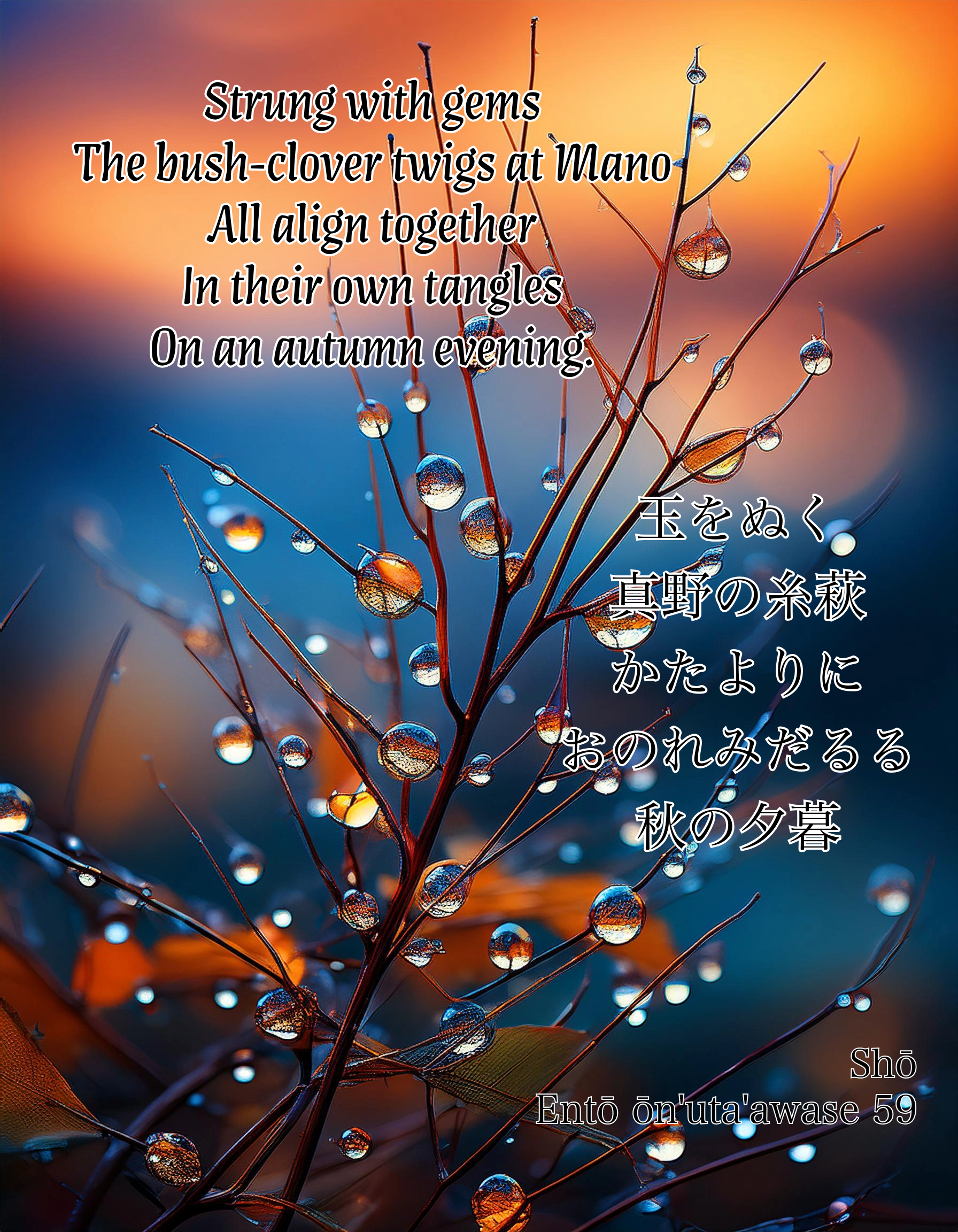
玉をぬく真野の糸萩かたよりにおのれみだるる秋の夕暮

tama o nuku
mano no itohagi
katayori ni
onore midaruru
aki no yūgure
Strung with gems
The bush-clover twigs at Mano
All align together
In their own tangles
On an autumn evening.

Shō
59

Right

待ちわたる時や来ぬらん白露の玉しく庭の秋はぎの花

machiwataru
toki ya konuran
shiratsuyu no
tama shiku niwa no
akihagi no hana
Has that long-awaited
Time arrived, perhaps?
When silver dewdrop
Pearls will spread o’er the grounds
From the autumn bush clover blooms…

Nagatsuna
60

The poems of Left and Right have different diction, but the same configuration.
Entō ōn’uta’awase 29

Round Twenty-Nine

Left (Win)

宮城のの木下風や過ぎぬらん露におくるる秋萩の花

miyagino no
ko no shitakaze ya
suginuran
tsuyu ni okururu
akihagi no hana
On Miyagi Plain has
The breeze beneath the trees
Passed by? For
Missing the dewfall are
The autumn bush clover blooms…

Takasuke
57

Right

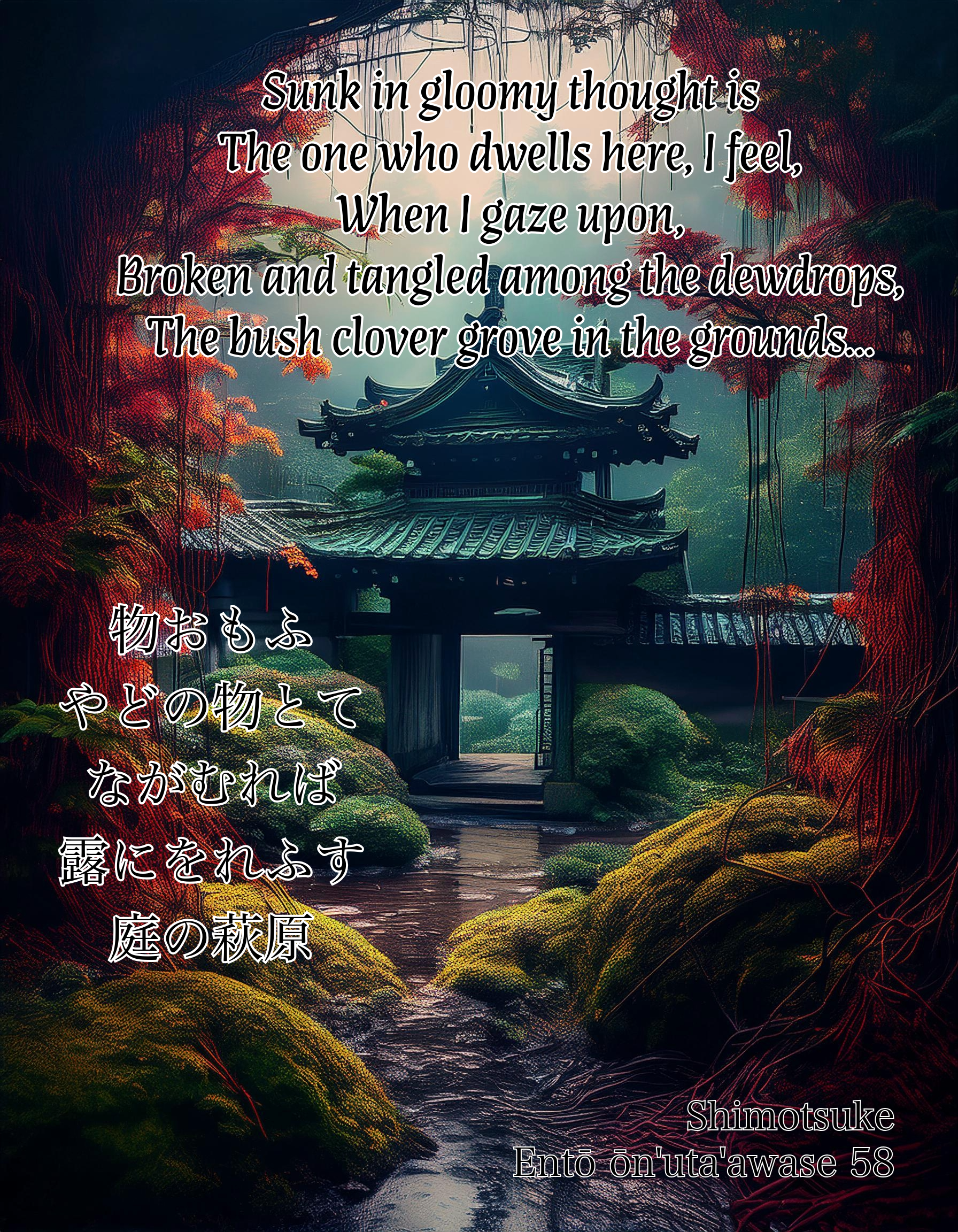
物おもふやどの物とてながむれば露にをれふす庭の萩原

mono’omou
yado no mono tote
nagamureba
tsuyu ni orefusu
niwa no hagiwara
Sunk in gloomy thought is
The one who dwells here, I feel,
When I gaze upon,
Broken and tangled among the dewdrops,
The bush clover grove in the grounds…

Shimotsuke
58

The Left poem’s ‘Missing the dewfall are the autumn bush clover’ sounds pleasant. The Right poem has no faults either, yet the Left should win.

Entō ōn’uta’awase 28

Round Twenty-Eight

Left

故郷の萩の下葉も色づきぬ露のみふかき秋のうらみに

furusato no
hagi no shitaba mo
irozukinu
tsuyu nomi fukaki
aki no urami ni
In this old, familiar place
The bush clover’s underleaves, too,
Have changed their hue—
Only the dew is deep
As autumn’s misery…[1]

Dōchin
55

Right (Win)

白露の玉ぬきみだる萩が枝に涙かずそふ秋の夕暮

shiratsuyu no
tama nukimidaru
hagi ga e ni
namida kazusou
aki no yūgure
Silver dewdrop
Pearls are strung in tangles on
The bush clover’s branches—
Innumerable tears added
On an autumn evening…

Dharma Master Nyokan
56

Left and Right both have a refined style, yet the Right has a better tone and sounds elegant. Thus, it wins.


[1] An allusive variation on: 比日之 暁露丹 吾屋前之 芽子乃下葉者 色付尓家里 kono koro no / akatoki tsuyu ni / wa ga yado no / hagi no shitaba wa / irozukinikeri ‘Around thus time near / Dawn, the dewfall on / My dwelling’s / Bush clover underleaves / Has changed their hue!’ Anonymous (MYS X: 2182)

Entō ōn’uta’awase 27

Round Twenty-Seven

Left (Tie)

高砂のすそ野の真萩露ふかし嶺の秋風ふかずもあらなむ

takasago no
susono no ma’hagi
tsuyu fukashi
mine no akikaze
fukazu mo aranamu
On Takasago’s
Slopes the fair bush clover is
Deep in dew—
O, that the autumn winds from the peak
Would fail to blow…

The Supernumerary Major Counsellor
53

Right

久かたの天とぶかりの涙さへおちてみだるる萩のうは露

hisakata no
ama tobu kari no
namida sae
ochite midaruru
hagi no uwazuyu
From the eternal
Heavens flying, even the goose
Tears
Drop in confusion
Overlaying the dew upon the bush clover.[1]

Nobunari
54

Both Left and Right seem particularly pleasant. Thus, they tie.


[1] An allusive variation on: Topic unknown. なきわたるかりの涙やおちつらむ物思ふやどの萩のうへのつゆ nakiwataru / kari no namida ya / ochitsuran / mono’omou yado no / hagi no ue no tsuyu ‘Calling across / Did the geese let tears / Fall? / My dwelling, lost in thought, / Has dew upon the bush clover.’ Anonymous (KKS IV: 221)

Entō ōn’uta’awase 26

Round Twenty-Six

Left

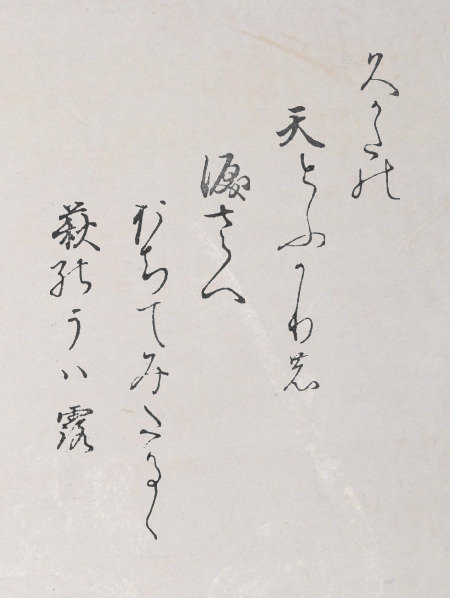
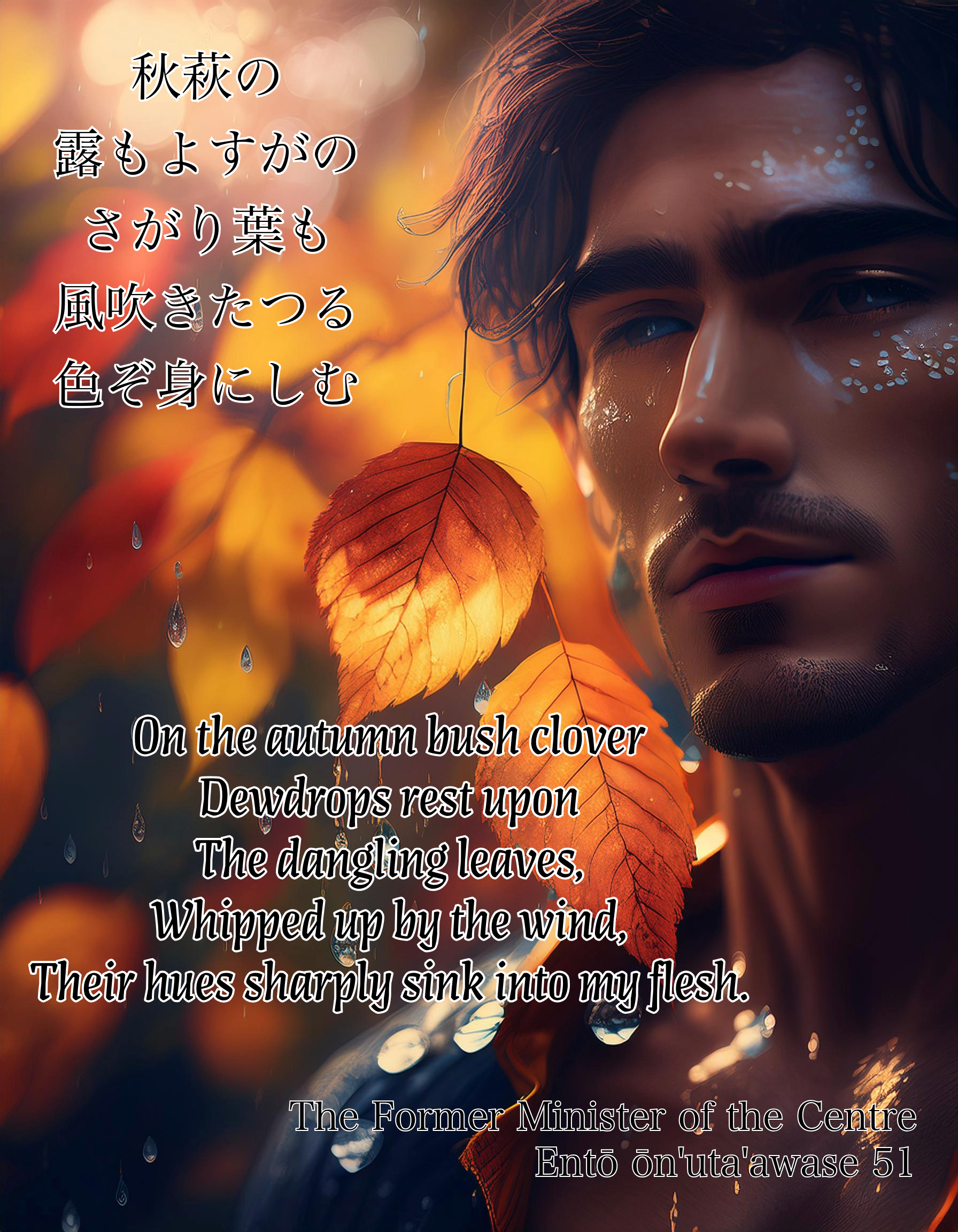
秋萩の露もよすがのさがり葉も風吹きたつる色ぞ身にしむ

akihagi no
tsuyu mo yosuga no
sagariba mo
kaze fukitatsuru
iro zo mi ni shimu
On the autumn bush clover
Dewdrops rest upon
The dangling leaves,
Whipped up by the wind,
Their hues sharply sink into my flesh.

The Former Minister of the Centre
51

Right (Win)

さだめなき風を待つ間もうつろひぬもとあらの萩にむすぶ白露

sadamenaki
kaze o matsu ma mo
utsuroinu
motoara no hagi ni
musubu shiratsuyu
While the unsettled
Breeze they do await,
Faded from
The sparse bush clover have
The clinging dewdrops.[1]

Kozaishō
52

The Left poem’s ‘rest upon the dangling leaves, whipped up by the wind’ seems a novel style, and yet, even though everything about dangling leaves is contained in the Ancient and Modern, it does not sound particularly evocative. The Right lacks even a small fault and appears gorgeous, so it should win.


[1] An allusive variation on: Topic unknown. 宮木野のもとあらの小萩つゆをおもみ風をまつごと君をこそまつ miyagino no / motoara no kohagi / tsuyu o omomi / kaze o matsu goto / kimi o koso matsu ‘On Miyagi Plain / The sparse bush clover / Weighed down with dewdrops / Awaits the wind, just as / I do wait for you…’ Anonymous (KKS XIV: 694)

Entō ōn’uta’awase 25

Round Twenty-Five

Dew on Bush Clover

Left

下葉には色なる玉やくだくらむ風の吹きしく萩の上の露

shitaba ni wa
iro naru tama ya
kudakuramu
kaze no fukishiku
hagi no ue no tsuyu
From the underleaves
Hues have the gemlets taken
In their shattering?
Spread by the gusting wind
Are the dewdrops on the bush clover…

A Court Lady
49

Right (Win)

又やみむ又や見ざらん白露の玉おきしける秋萩の花

mata ya mimu
mata ya mizaran
shiratsuyu no
tama okishikeru
akihagi no hana
Will I see again, or
Will I not
Silver dewdrop
Pearls spread upon
The autumn bush clover blooms?

Ietaka
50

The Left’s poem does not seem to have a particularly superlative style. The Right’s poem, saying ‘will I see again, or will I not silver dewdrops’ is particularly charming and moving. Thus, it wins.

Entō ōn’uta’awase 24

Round Twenty-Four

Left (Tie)

覚束なたれきけとてか時鳥さよふけ方の雲に鳴くらん

obotsukana
tare kike tote ka
hototogisu
sayo fukegata no
kumo ni nakuran
I do not understand—
Who is it that you demand hears you,
O, cuckoo?
Toward brief night’s dawn,
Calling from within the clouds…

Tomoshige
47

Right

待ちかねしよはも昔にかはらねばことしもつらし山時鳥

machikaneshi
yowa mo mukashi ni
kawaraneba
kotoshi mo tsurashi
yamahototogisu
Eagerly awaiting
Midnight, to find—as long before—
It all unchanged, so
This year, too, how cruel is
The mountain cuckoo!

Dharma Master Zenshin
48

Both Left and Right sound suitable. So, they should tie.

Entō ōn’uta’awase 23

Round Twenty-Three

Left (Tie)

時鳥山よりをちの里人はまたでや夜半の初音きくらん

hototogisu
yama yori ochi no
satobito wa
matade ya yowa no
hatsune kikuran
O, cuckoo,
Far from the mountains,
Will villagers
Without waiting, at midnight
Ever hear your first cry?

Chikanari
45

Right

うちしめる花橘の五月雨に軒もる夜半のほととぎすかな

uchishimeru
hanatachibana no
samidare ni
noki moru yowa no
hototogisu kana
When utterly drenched is
The orange blossom by
The summer showers.
Dripping from the eaves at midnight is
A cuckoo’s call!

Ie’kiyo
46

The Right’s poem has ‘Dripping from the eaves at midnight is a  cuckoo’s call!’—this sounds like it conveys the conception, but yet is stylistically unclear. The Left’s poem takes up the conception of ‘On the leg-wearying / Mountains’ far side / Folk dwell—I wonder / Do they not have to wait for the autumn / Moon to fill their gaze?’,[1] doesn’t it? Neither has any real point worth making, so they tie.


[1] This poem is: Topic unknown. あしびきの山のあなたにすむ人はまたでや秋の月をみるらんashihiki no / yama no anata ni / sumu hito wa / matade ya aki no / tsuki o miruran Former Emperor Sanjō (SKKS IV: 382).

Entō ōn’uta’awase 22

Round Twenty-Two

Left (Win)

五月雨にやすらふ暮の時鳥そなたの雲に声なへだてそ

samidare ni
yasurau kure no
hototogisu
sonata no kumo ni
koe na hedate so
In a summer shower,
Hesitating, at twilight,
O, cuckoo,
Let not the intervening clouds
Interrupt your song!

Shō
43

Right

過ぎぬなりさやはちぎりし時鳥なく音ばかりはこぞにかはらで

suginunari
saya wa chigirishi
hototogisu
naku ne bakari wa
kozo ni kawarade
And so you’ve flown by—
Is that what you vowed,
O, cuckoo?
For only the sound of your song
Is unchanged from the year before…

Nagatsuna
44

The Left’s poem doesn’t seem bad. The Right poem’s ‘For only the sound of your song is unchanged from the year before’ is somewhat difficult to grasp—if the cuckoo’s call has not changed, then what has? After all, cuckoos have ‘the voice of yesteryear’[1]—among other references—so it’s obvious that their calls don’t change, so the Left is somewhat better, I think.


[1] KKS III: 137

Entō ōn’uta’awase 21

Round Twenty-One

Left (Win)

しがらきの外山の末の郭公たが里ちかき初音なるらん

shigaraki no
toyama no sue no
hototogisu
ta ga sato chikaki
hatsune naruran
In Shigaraki
At the foothills’ end
A cuckoo
By whose estate
Might let out his first cry?

Takasuke
41

Right

橘のにほひを空に尋ねきて山時鳥なかぬ日ぞなき

tachibana no
nioi o sora ni
tazunekite
yamahototogisu
nakanu hi zo naki
Orange blossom’s familiar
Scent within the skies
I seek out, while
The mountain cuckoo
Fails to sing on not a single day…

Shimotsuke
42

The Left poem’s ‘near whose estate does it first call’ does not sound bad. The Right’s poem, too, seems to have no faults to mention, yet the Left still wins by a hair.