Tag Archives: pines

Sumiyoshi-sha uta’awase kaō ni-nen 24

Left

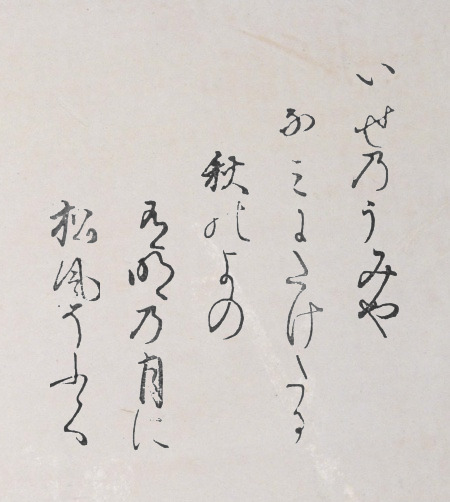
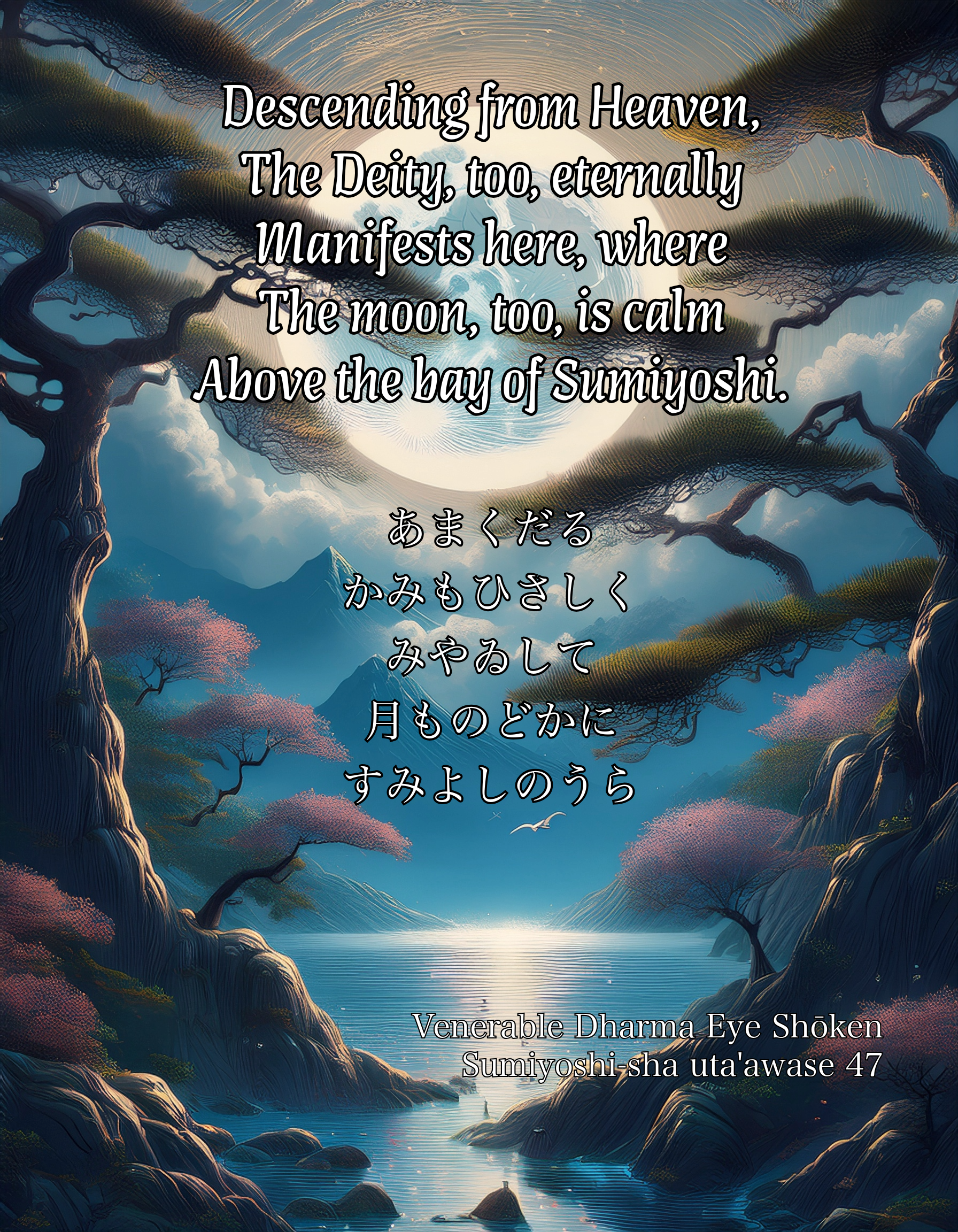
あまくだるかみもひさしくみやゐして月ものどかにすみよしのうら

amakudaru
kami mo hisashiku
miya’ishite
tsuki mo nodoka ni
sumiyoshi no ura
Descending from Heaven,
The Deity, too, eternally
Manifests here, where
The moon, too, is calm
Above the bay of Sumiyoshi.

Venerable Dharma Eye Shōken[1]
47

Right (Win)

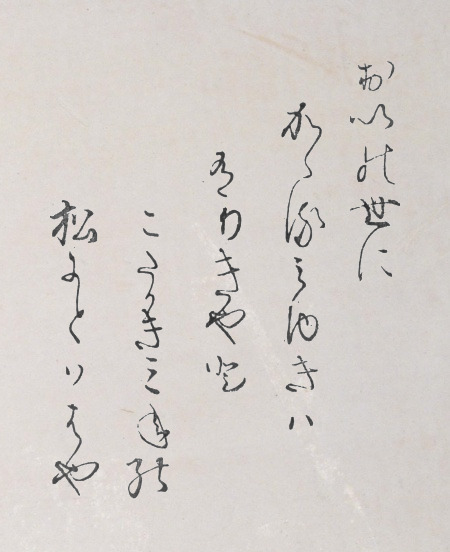
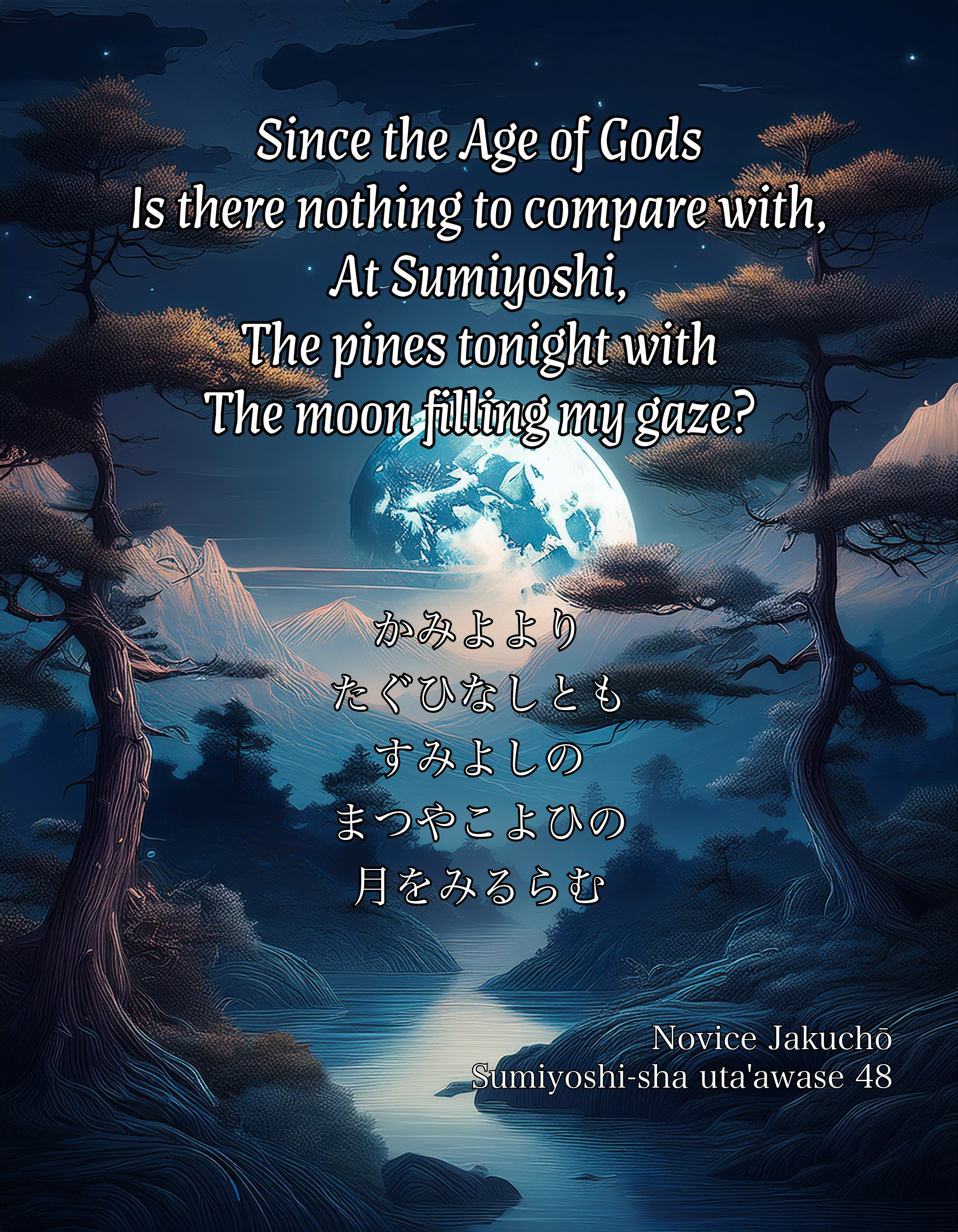
かみよよりたぐひなしともすみよしのまつやこよひの月をみるらむ

kamiyo yori
taguinashi tomo
sumiyoshi no
matsu ya koyoi no
tsuki o miruramu
Since the Age of Gods
Is there nothing to compare with,
At Sumiyoshi,
The pines tonight with
The moon filling my gaze?

Novice Jakuchō[2]
48

The Left appears to have a truly charming conception and configuration, but beginning with ‘The Deity, too, eternally’ and then saying ‘The moon, too, is calm’ and repeating the same word is discordant. The Right, in addition to having no particular faults to mention, has an extremely pleasant-sounding configuration with ‘The pines tonight’. Thus, I make this a win for the Right.
[1] Hōgen kashōi Shōkaku 法眼和尚位静賢

[2] Shami Jakuchō沙弥寂超
Sumiyoshi-sha uta’awase kaō ni-nen 23

Left (Tie)

すみよしのきしうつなみにてる月はこかげもあかしまつのむらだち

sumiyoshi no
kishi utsu nami ni
teru tsuki wa
kokage mo akashi
matsu no muradachi
At Sumiyoshi
Upon the waves, striking the shore,
Shines the moon—
The shadows of the trees are bright
Among the crowding pines.

Chūnagon, in service to the Former Ise Virgin[1]
45

Right

としふりてかみさびにけるすみのえのきしのたまもをみがく月かげ

toshi furite
kamisabinikeru
suminoe no
kishi no tamamo o
migaku tsukikage
Ancient in years is
The dread
Suminoe
Shore, where gemweed
Is polished by the moonlight.

Novice Sokaku[2]
46

The Left’s poem has a truly charming conception, with ‘Upon the waves, striking the shore, / Shines the moon’ reflecting and making the pines’ shadows shine. However, what are we to make of the use of ‘bright’ here? My late master once stated that he had too often heard such diction being used. The poem of the right appears to have pleasant configuration and diction, but, while it is only natural to say that the Suminoe’s shore is dread, I wonder about the appropriateness of going so far as to say that gemweed is? It’s going a bit far, I think, to bring in ‘gemweed’ simply to link it to ‘polish’. Nevertheless, the configuration of the poem appears pleasant, so I call this a tie.


[1] Zen-saigū no Chūnagon前斎宮中納言

[2] Shami Sokaku沙弥素覚

Kenreimon’in ukyō no daibu-shū 119

When she had gone to Kamo on a winter’s night when the moon was shining brightly.

神がきや松のあらしもおとさえて霜にしもしく冬の夜のつき

kamigaki ya
matsu no arashi mo
oto saete
shimo ni shimo shiku
fuyu no yo no tsuki
At the sacred grounds,
Storm winds through the pines
Sound so chill;
Frost atop of frost is spread,
The moon this winter’s night.

Kenreimon’in ukyō no daibu

SIS XVI: 1026

On a Day of the Rat, when Major Captain of the Right Sanesuke was lower in rank.

おいの世にかかるみゆきは有りきやとこだかき峯の松にとはばや

oi no yo ni
kakaru miyuki Fa
ariki ya to
kodakaki mine no
matu ni toFaba ya
In ancient ages
Did ever such a progress
Occur?
On the high, tree-covered peak
I would ask the pines…

’Kiyowara no Motosuke

Tametadake shodo hyakushu 675

Before a shrine.

すみよしのまつのしづえにいくちよかなみのしらゆふかけてきぬらん

sumiyoshi no
matsu no shizue ni
ikuchiyo ka
nami no shirayū
kakete kinuran
At Sumiyoshi
The pines’ lower branches
For how many thousand ages
With the waves’ white sacred streamers
Have come to be hung.

Fujiwara no Tadanari
藤原忠成

Sumiyoshi-sha uta’awase kaō ni-nen 19

Left

さえわたる月のひかりやすみよしのまつのはしのぎふれるしらゆき

saewataru
tsuki no hikari ya
sumiyoshi no
matsu no ha shinogi
fureru shirayuki
So chill
The moon’s light, that
Sumiyoshi’s
Pines’ needles seem weighed down
With fallen snow.

Grand Dharma Master Yūsei[i]
37

Right (Win)

月のすむなにはのうらのけしきにはかみのこころもたえずやあるらむ

tsuki no sumu
naniwa no ura no
keshiki ni wa
kami no kokoro mo
taezu ya aruramu
The moon rising above
The bay of Naniwa—
At the scene
Even the Deity’s heart
Must be unable to endure…

Lord Fujiwara no Norimori
Junior Fifth Rank, Lower Grade
Without Office[ii]
38

The poem of the Left appears pleasant in configuration and sequencing, but it lacks any profundity of thought and simply seems to flow easily. The Right’s poem appears to have some conception, managing to follow ‘Having a sensitive heart: / To such a one would I show / The land of Tsu’[1] and also seems to sound as if it conveys the sense of the old poem about a man finding the bay of Naniwa unbearably fine[2]. With that being said, expanding this to the Deity’s heart as well is charming. Thus, the Right wins.


[1] Sent to someone’s residence, when he was in Tsu province around the beginning of the year. こころあらむ人にみせばやつのくにのなにはわたりのはるのけしきを kokoro aramu / hito ni miseba ya / tsu no kuni no / naniwa watari no / haru no keshiki o ‘I would to a sensitive / Soul show / The land of Tsu / Around Naniwa— / Truly, the scenery of spring!’ Dharma Master Dōin (GSIS I: 43)

[2] Composed as a spring poem, when he presented a hundred-poem sequence. 心なきわが身なれども津の国の難波の春にたへずも有るかな kokoro naki / wagami naredomo / tsu no kuni no / naniwa no haru ni / taezu mo aru kana ‘Insensitive / Is my sorry self, yet / In the land of Tsu / Naniwa in springtime is / Unbearably fine!’ Fujiwara no Suemichi (SZS II: 106/Kyūan hyakushu 413)


[i] Daihōshi Yūsei大法師祐盛

[ii] San’i jūgoige Fujiwara ason Norimori 散位従五位下藤原朝臣憲盛