Shūigusō 1895

A place where summer grasses grow lushly in a grove out on the plains.

わけ行けば夏のふかさぞしられける森の下草末もはるかに

wakeyukeba
natsu no fukasa zo
shirarekeru
mori no shitagusa
sue mo haruka ni
When I forge my way through,
The depths of summer, indeed,
I come to know!
The undergrowth within the grove has
Tips stretching into the distance…

Teika

Shunzei-kyō no musume-shū 40

ひととはぬ庭のよもぎの跡もなく茂りにけりな夏のふかさに

hito towanu
niwa no yomogi no
ato mo naku
shigerinikeri na
natsu no fukasa ni
No folk enquire, so
The mugwort in my garden
Is trackless and
Overgrown,
In the depths of summer…[i]

40


[i] See: Topic unknown.

なつくさはしげりにけりなたまぼこのみちゆき人もむすぶばかりに

natsu kusa wa
shigerinikeri na
tamaboko no
michi yuki hito mo
musubu bakari ni
The summer grasses
Have grown lush and thick, indeed –
Jewelled spear straight,
The road he travels –
The better he may braid them.

Fujiwara no Motozane
Shinkokinshū III: 188

And: Topic unknown.

夏草はしげりにけれどほとゝぎすなどわがやどに一聲もせぬ

natsu kusa wa
shigerinikeredo
hototogisu
nado wa ga yado ni
hito koe mo senu
The summer grasses
Have grown lush and thick, yet,
O, cuckoo
Why at my home
Do you not give a single call?

The Engi Emperor
Shinkokinshū III: 189

And: A place where summer grasses grow lushly in a grove out on the plains.

わけ行けば夏のふかさぞしられける森の下草末もはるかに

wakeyukeba
natsu no fukasa zo
shirarekeru
mori no shitagusa
sue mo haruka ni
When I forge my way through,
The depths of summer, indeed,
I come to know!
The undergrowth within the grove has
Tips stretching into the distance…

Teika
Shūigusō 1895

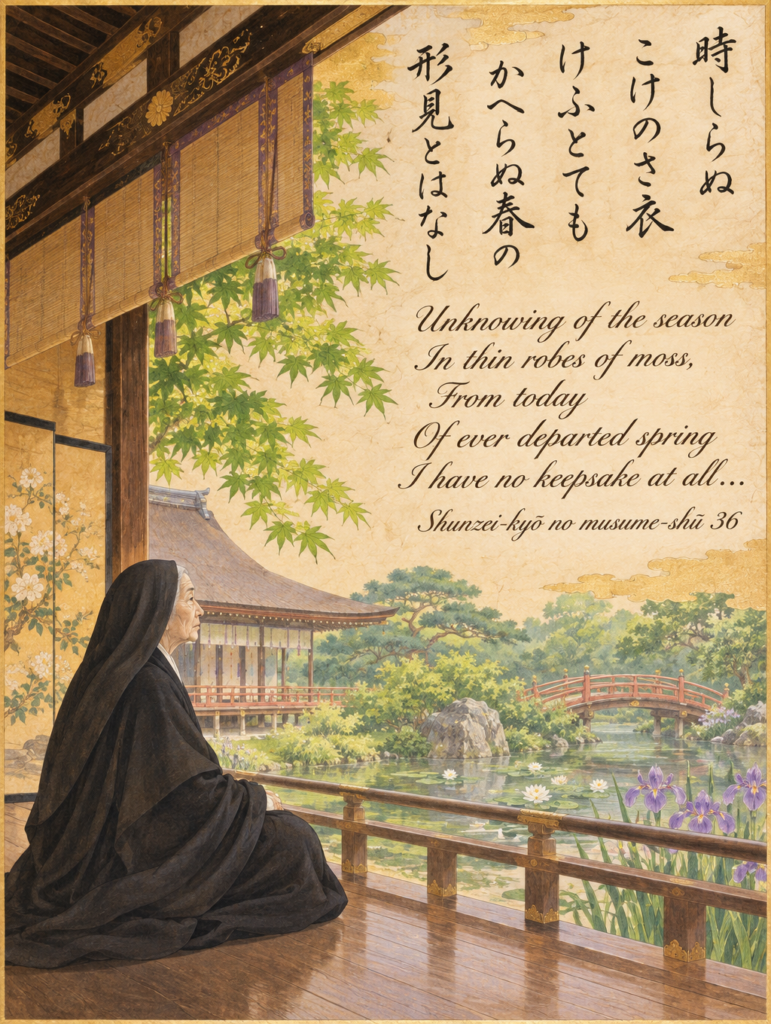
Shunzei-kyō no musume-shū 39

五月雨れて浪よせまさる須磨の浦の藻塩にくたす蜑の袖かな

samidarete
nami yosemasaru
suma no ura no
moshio ni kutasu
ama no sode kana
A summer shower
On surging waves
At the shore of Suma
Where brineweed rots away
The sleeves of fisherfolk! [i]

39


[i] See: During the reign of the Tamura Emperor, when he was confined to Suma in the province of Tsu for certain reasons, he sent this to someone in the capital.

わくらばにとふ人あらばすまの浦にもしほたれつつわぶとこたへよ

wakuraba ni
tou hito araba
suma no ura ni
moshio taretsutsu
wabu to kotaeyo
If of me
Folk should come enquiring, then as
On the beach at Suma
The brineweed ever drips,
I suffer—answer that!

Ariwara no Yukihira
Kokinshū XVIII: 962

And:

須磨の浦に心をよせし舟人のやがて朽たせる袖を見せばや

suma no ura ni
kokoro o yoseshi
funabito no
yagate kutaseru
sode o miseba ya
To the shore at Suma
Drawn is the heart
Of a fisher-girl,
Ever since her rotted
Sleeves to you she would show…

Gosechi
Genji monogatari 246

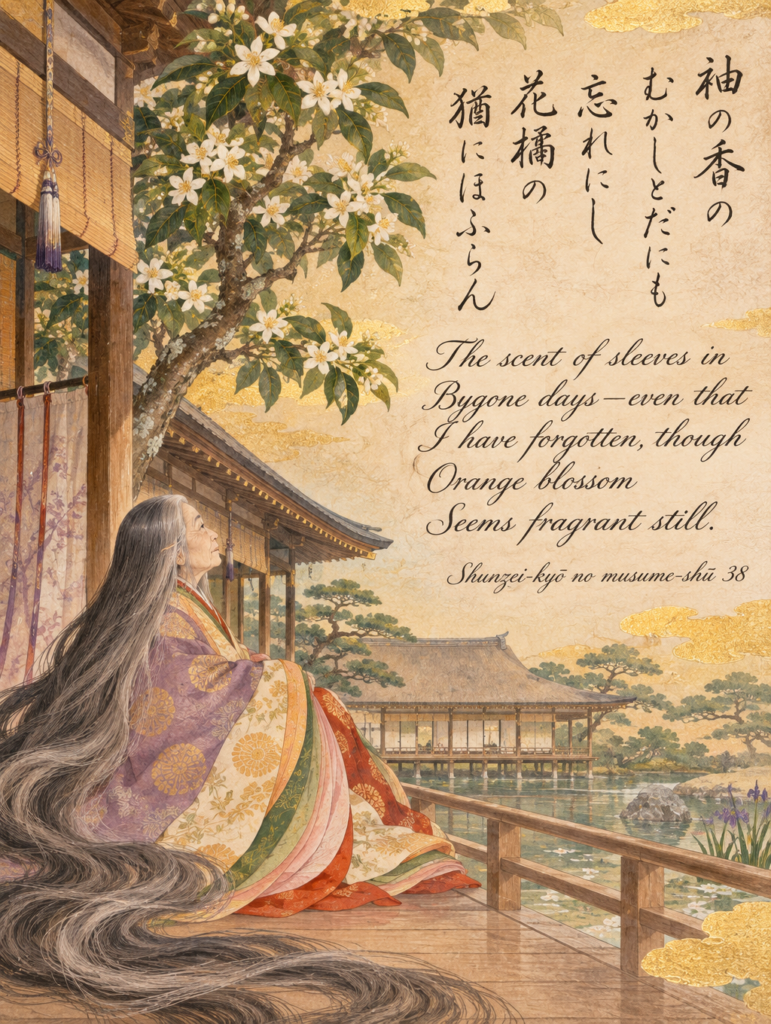
Shunzei-kyō no musume-shū 38

袖の香のむかしとだにも忘れにし花橘の猶にほふらん

sode no ka no
mukashi to dani mo
wasurenishi
hanatachibana no
nao niouran
The scent of sleeves in
Bygone days—even that
I have forgotten, though
Orange blossom
Seems fragrant still.[i]

38


[i] An allusive variation on: Topic unknown.

さつきまつ花橘のかをかげば昔の人の袖のかぞする

satsuki matsu
hana tachiibana no
ka o kageba
mukashi no hito no
sode no ka zo suru
Awaiting the Fifth Month
The orange blossoms’
Scent fills the air, and
Folk from long ago
With their perfumed sleeves come back to me.

Anonymous
Kokinshū III: 139

Sankashū I: 99

When the blossom at the Seka’in was in full bloom, this was sent to me from Toshitaka’s[i] residence.

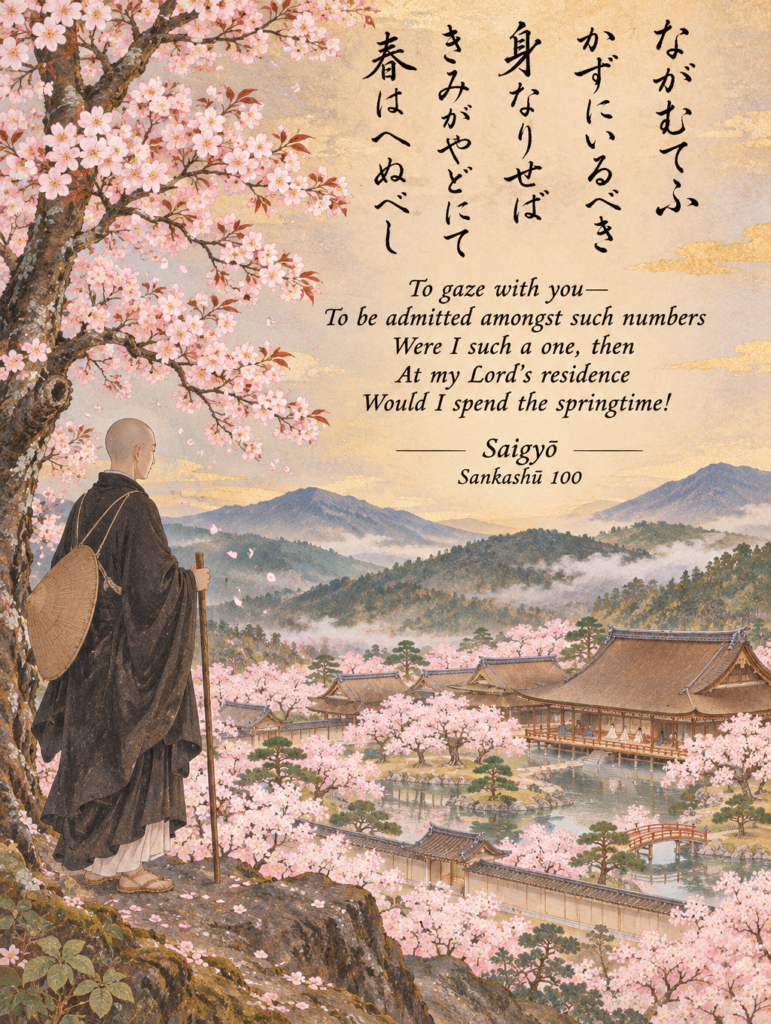
おのづからくる人あらばもろともにながめまほしき山ざくらかな

onozukara
kuru hito araba
morotomo ni
nagamemahoshiki
yamazakura kana
If, perhaps,
There were someone to come, then
Together
I would wish to gaze on
Mountain cherry blossoms!

99


[i] The identity of this individual is unknown.

Sankashū I: 98

When I made a pilgrimage to Kumano, the blossom at Yagami-no-Ōji[i] were white, so I wrote this and attached it to the shrine.

まちきつるやがみのさくらさきにけりあらくおろすなみすの山かぜ

machikitsuru
yagami no sakura
sakinikeri
araku orosu na
misu no yamakaze
Pining, have I come
To Yagami’s cherries
In bloom.
Roughly do not blow them down,
O, winds from Misu Mountain!

98


[i] Yagami-no-ōji 八上王子 was one of the ninety-nine shrines at which pilgrims travelling from the capital to Kumano would pay their respects to the deity, Kumano-gongen 熊野権現. Ruins of this shrine still exist, alongside the current Yagami Shrine (yagami jinja 八上神社) in Kamitonda 上富田 in Wakayama prefecture, where Saigyō’s visit is commemorated by a stele engraved with this waka.