Plovers on a cold night.
| kaze samumi yo no fukeyukeba imogashima katami no ura ni chidori nakunari | So chill the wind As the night wears on At Imogashima, On Katami Shore The plovers cry. |
356


Round Fourteen
Left (Win)
みやゐしていくよへぬらむすみよしのまつふくかぜもかみさびにけり
| miya’ishite iku yo henuramu sumiyoshi no matsu fuku kaze mo kamisabinikeri | Since He manifested here How many ages might have passed? At Sumiyoshi The wind gusting through the pines, too, Is touched with divinity… |
Tsunemasa
127
Right
よのなかをいとふこころはさきだちていつまでとまるうきみなるらむ
| yo no naka o itou kokoro wa sakidachite itsu made tomaru ukimi naruramu | This mundane world My heart does despise and Would depart, but How long will I remain, Suffering as I am? |
Nakatsuna
128
Both Left and Right are expressions of grievance, but the Left is merely concerned with ‘Since He manifested here / How many ages might have passed?’, while the Right simply wonders ‘How long will I remain’ while despising the mundane world. I cannot really say that either is superior in the emotions they express, yet due to its reference to the deity, I should say that the Left wins.


Round Twenty-Two
Left
いなむしろしきつのうらのまつかぜはもりくるをりぞしぐれともしる
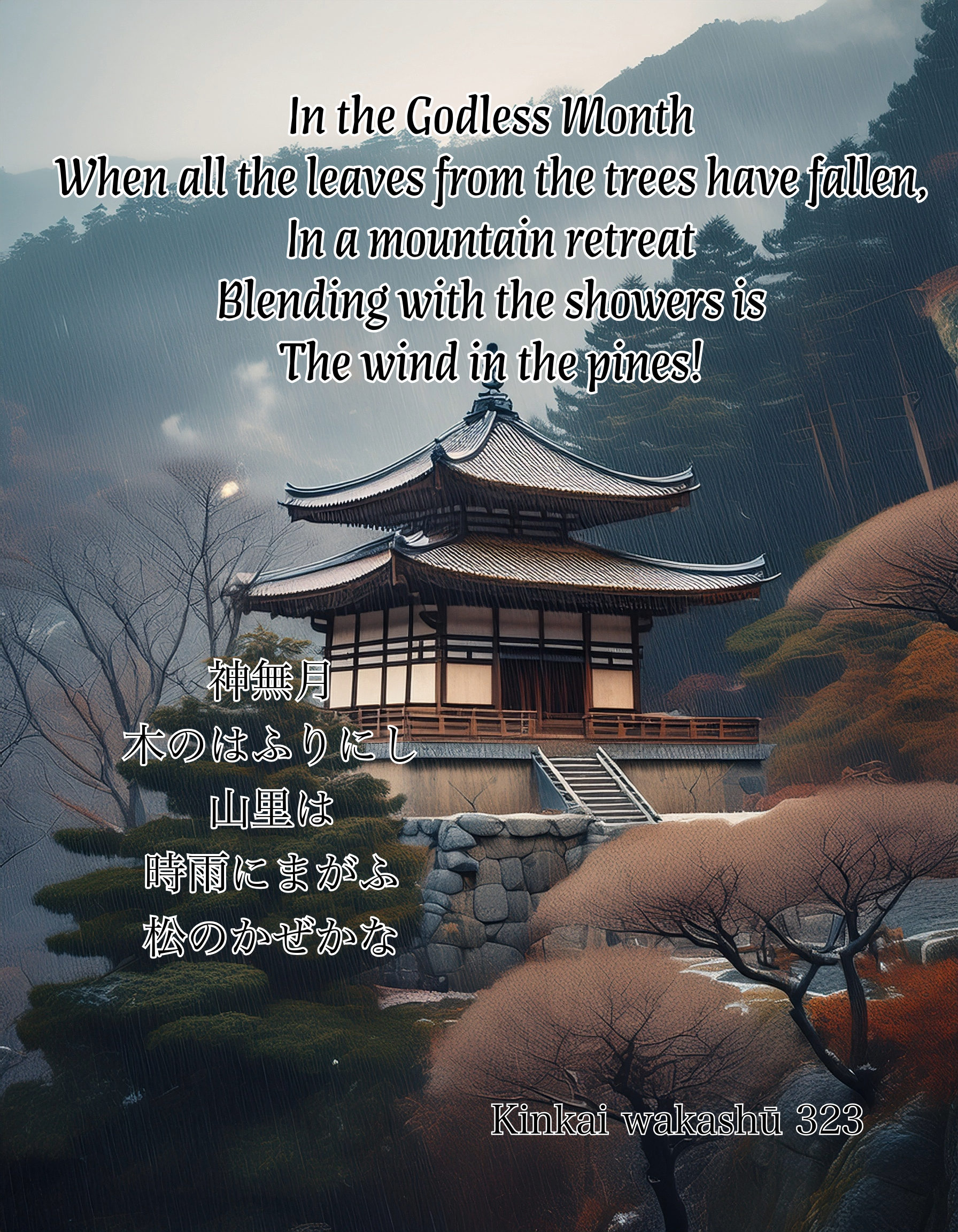
| inamushiro shikitsu no ura no matsukaze wa morikuru ori zo shigure to mo shiru | A straw mat spread At Shikitsu Bay, where when On the wind through the pines Come dripping droplets I know a shower is falling! |
Lord Kiyosuke
93
Right (Win)
おほぞらもみやこのかたをしのぶらしこよひはことにうちしぐれつつ
| ōzora mo miyako no kata o shinoburashi koyoi wa koto ni uchishiguretsutsu | The heavens, too, Of the capital Think fondly, it seems, For tonight is especially Filled with constant showers… |
Lord Sanetsuna
94
The poem of the Left appears to have a pleasant conception, blending showers with the wind through the pines and saying, ‘Come dripping droplets / I know a shower is falling!’, but it appears that the straw mat has only been spread because of the reference to Shikitsu [spreading] Bay. Considering the actual nature of a straw mat, however, I do not feel that the sense links with Shikitsu Bay, although it would be charming if sleeping on a journey in the shade of the willows beside a river, or even in a hut among the rice-fields. I do not feel it is appropriate to spread a straw mat beneath the pines at Sumiyoshi. In addition, it is only the straw mat here which has the conception of a journey—how should one feel about that? The configuration of the Right’s poem, beginning with ‘The heavens, too’ and following with ‘Of the capital / Think fondly, it seems’, I would say is a poem for a poetry match. While a counter-argument has been made about the Left’s poem, it’s really asking for the impossible, isn’t it. So, I impose victory for the Right.


Round Fourteen
Left
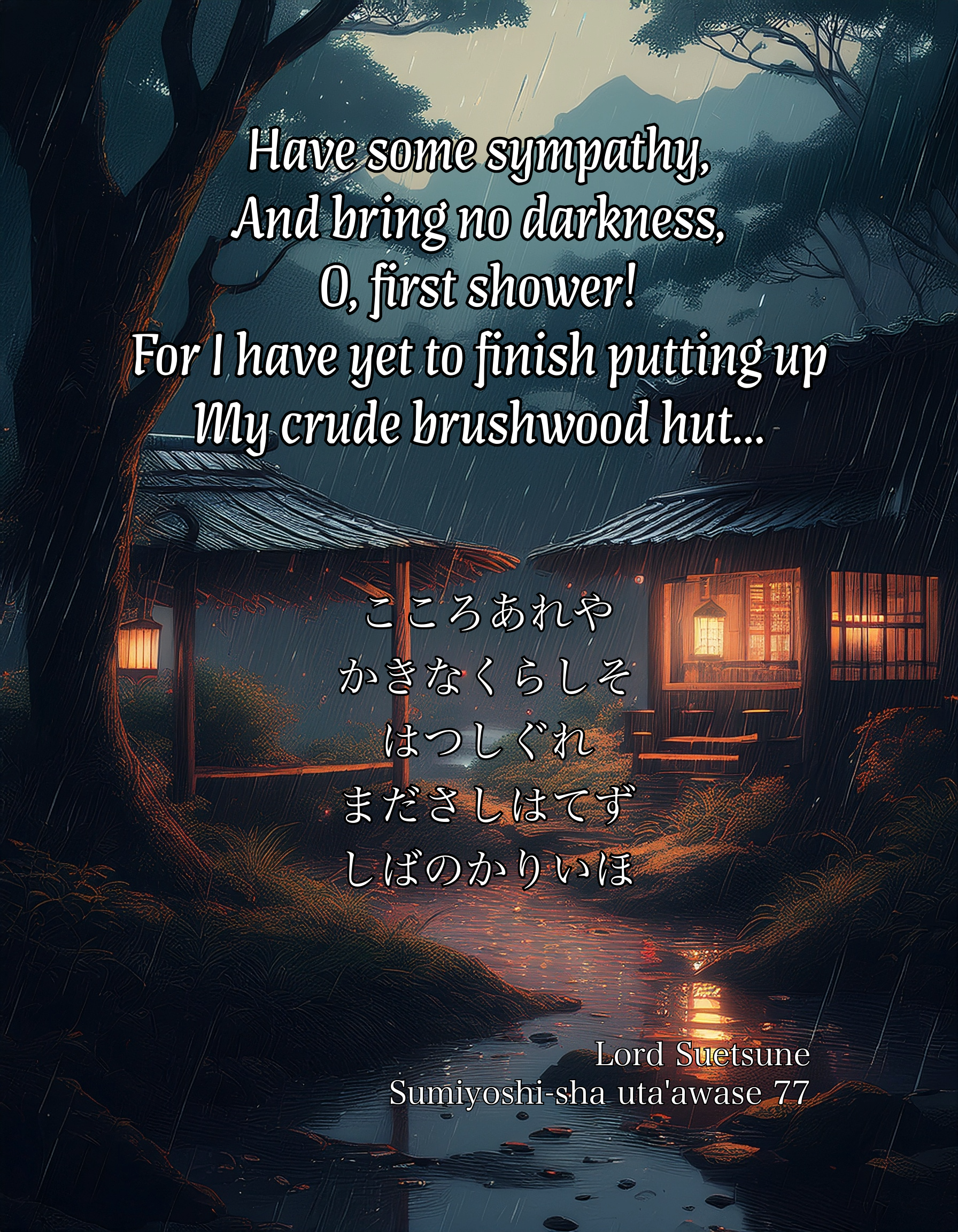
こころあれやかきなくらしそはつしぐれまださしはてずしばのかりいほ
| kokoro are ya kaki na kurashi so hatsushigure mada sashihatezu shiba no kari’io | Have some sympathy, And bring no darkness, O, first shower! For I have yet to finish putting up My crude brushwood hut… |
Lord Suetsune
77
Right (Win)
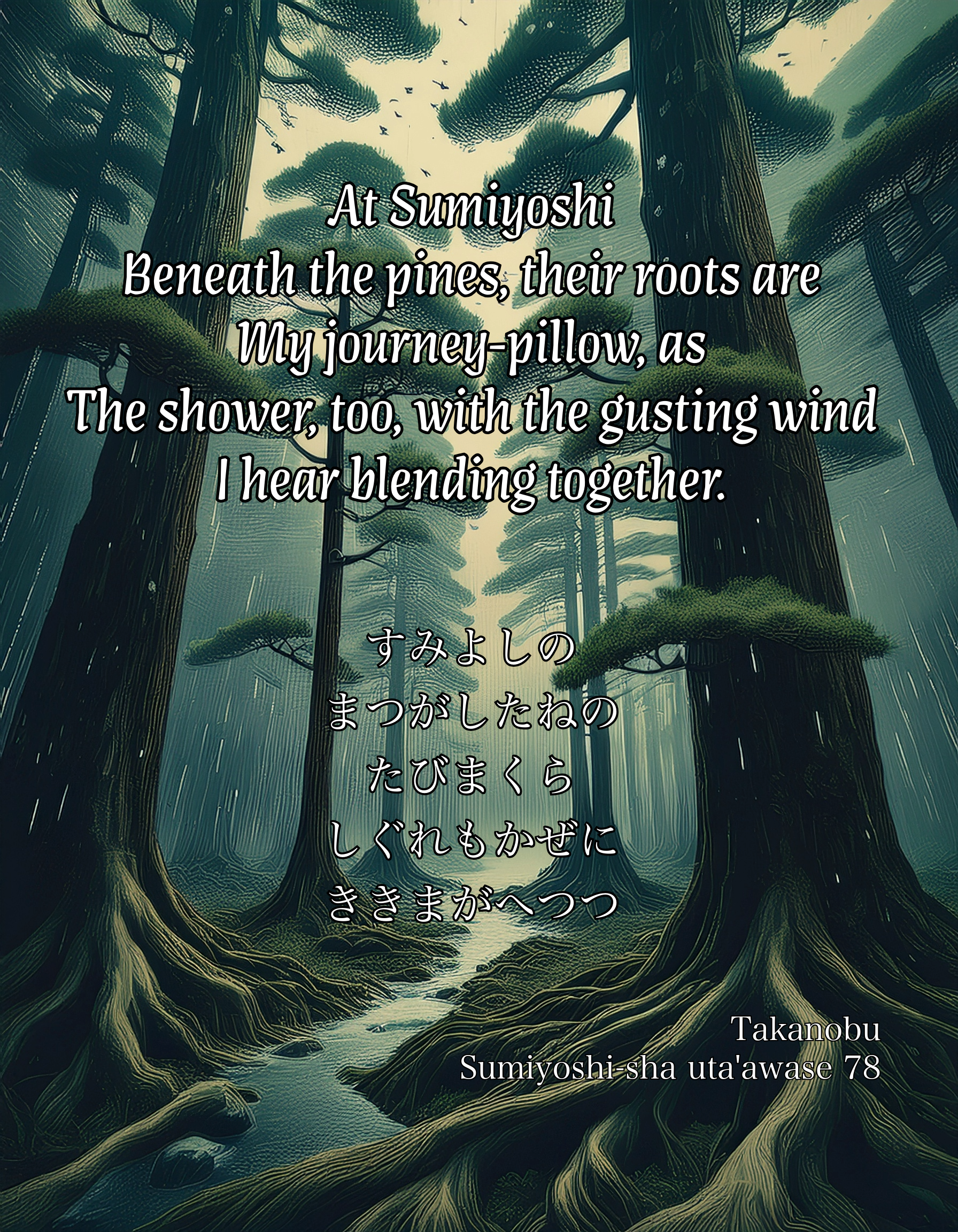
すみよしのまつがしたねのたびまくらしぐれもかぜにききまがへつつ
| sumiyoshi no matsu ga shita ne no tabimakura shigure mo kaze ni kikimagaetsutsu | At Sumiyoshi Beneath the pines, their roots are My journey-pillow, as The shower, too, with the gusting wind I hear blending together. |
Takanobu
78
The Left’s latter section, which states that the poet has ‘yet to finish putting up’ his hut, has a truly charming configuration as a poem on the conception of travel, but the phrase ‘have some sympathy’ does not appear to be a conception which has prior precedent. It could be a way of expressing the emotion through the shower. As for the Right, while I do question the sound of ‘journey-pillow’, it is the case that in Cathay-style poems this appears, but what are we do to about the fact that this is not ‘pillow on my journey’, I wonder? The sequencing of ‘the shower, too, with the wind’ is pleasant, isn’t it. Thus, I make the Right the winner.