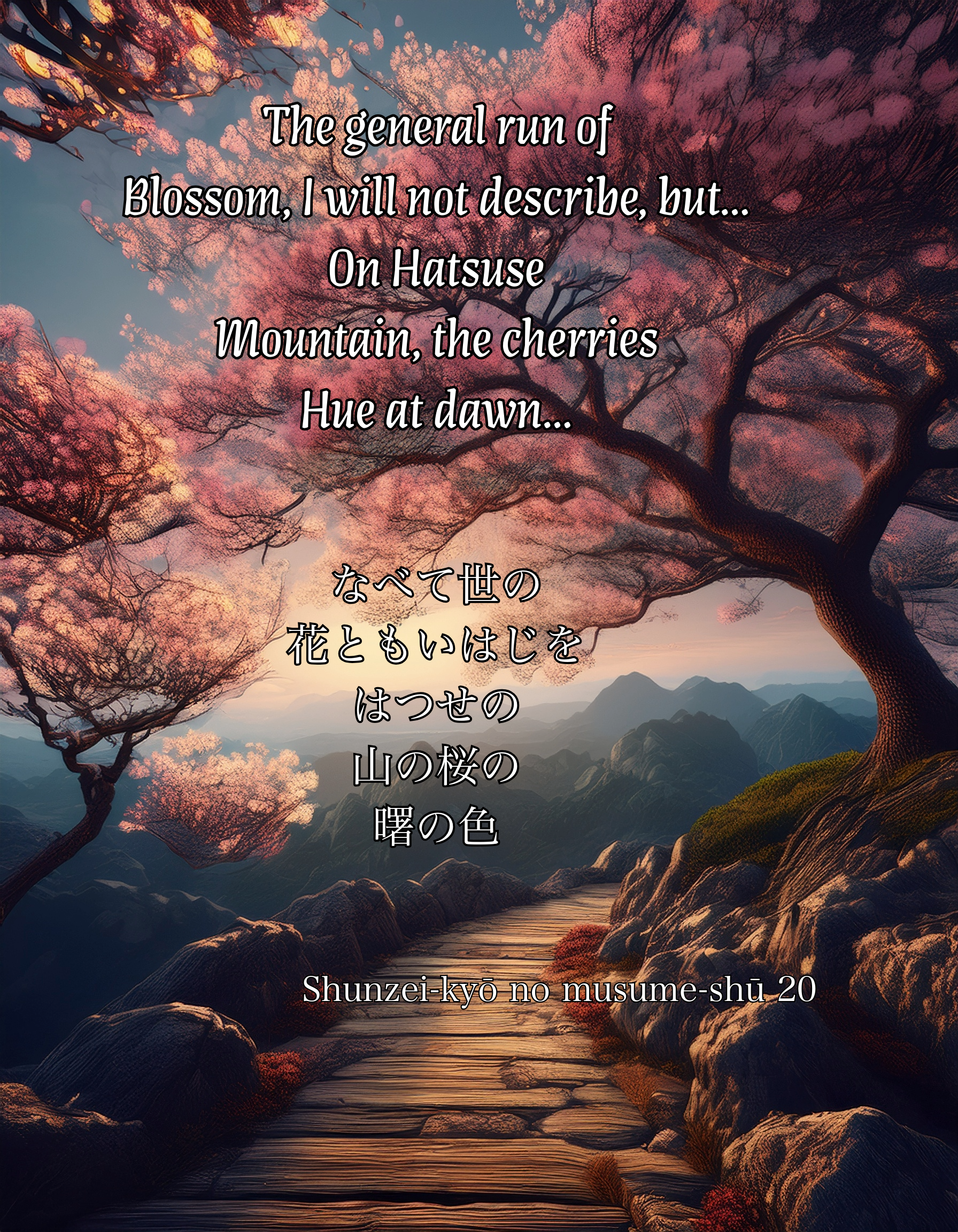
At the foot of a bridge.
かづらきや高間の山の山かぜに花こそわたれくめの岩ばし
| kazuragi ya takama no yama no yamakaze ni hana koso watare kume no iwabashi | In Kazuragi, From Takama peak The mountain breeze Carries e’en the blossom Over the broken stone bridge of Kume. |
22
Lakes
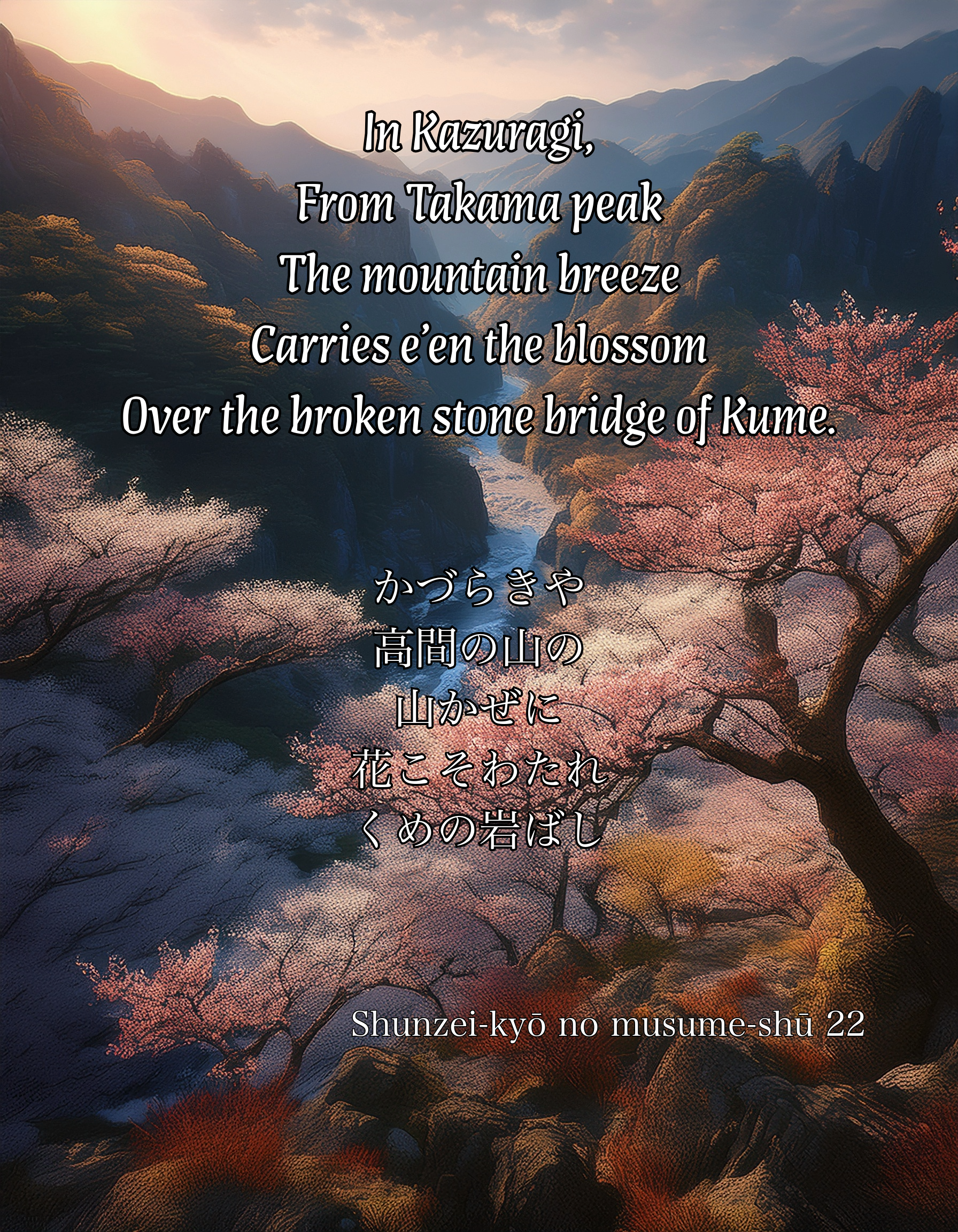
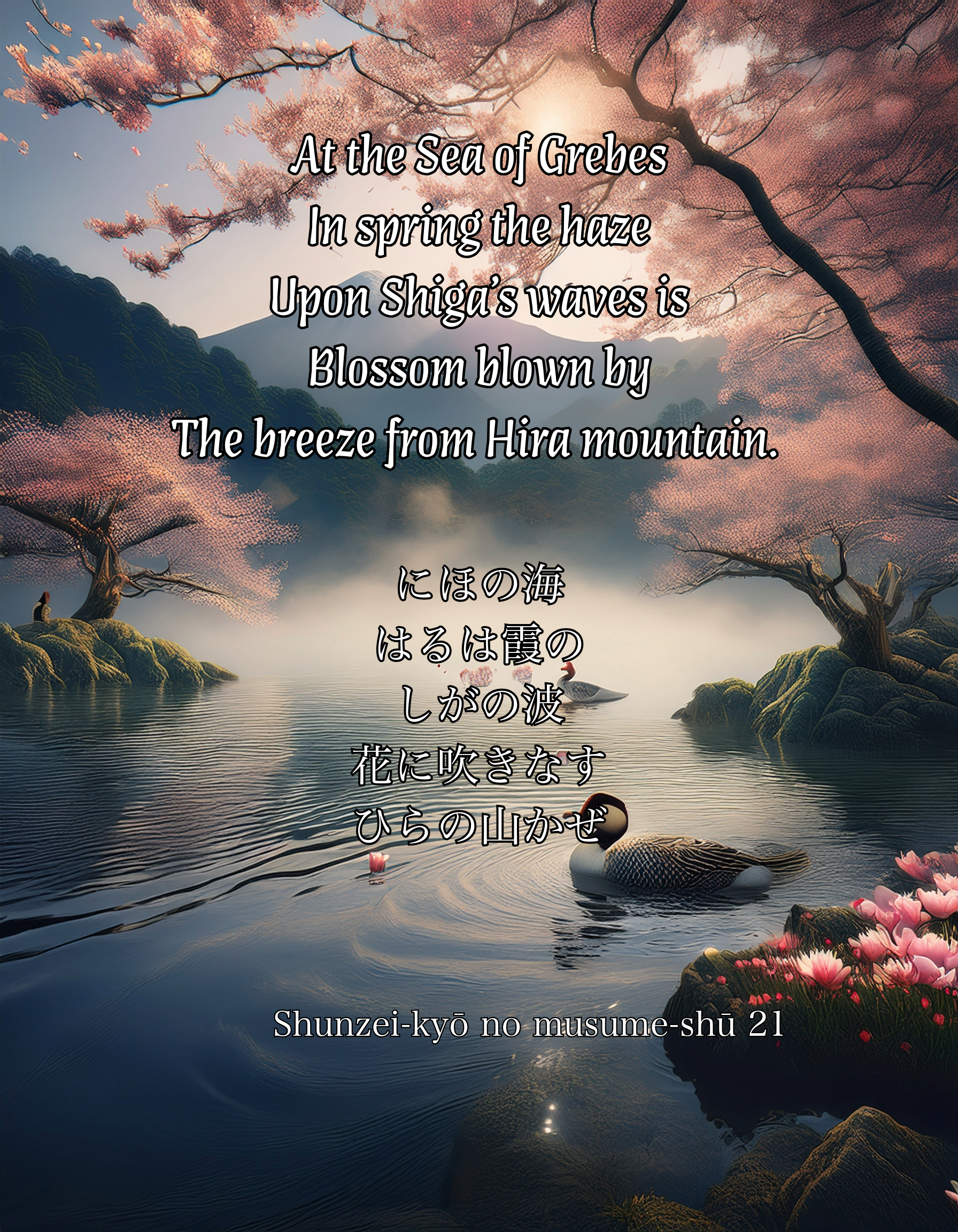
にほの海はるは霞のしがの波花に吹きなすひらの山かぜ
| nio no umi haru wa kasumi no shiga no nami hana ni fukinasu hira no yamakaze | At the Sea of Grebes In spring the haze Upon Shiga’s waves is Blossom blown by The breeze from Hira mountain. [i] |
21
[i] See: Composed as a poem on blossom. さくらさくひらの山かぜ吹くままに花になりゆくしがのうら浪 sakura saku / hira no yamakaze / fuku mama ni / hana ni nariyuku / shiga no uranami ‘Cherries flower on / Hira Mountain while / Breezes blow / All turned to blossom are / The waves on Shiga’s shore.’Yoshitsune, Middle Captain of the Inner Palace Guards, Left Division (Senzaishū II: 89)
Fifty Poems on the Moon and Blossom
Blossom on the mountains blooming unevenly.
おしなべて風こそかをれ春の山咲く桜あればさかぬ梢も
| oshinabete kaze koso kaore haru no yama saku sakura areba sakanu kozue mo | Each and every Breeze is truly scented! The mountains in spring Have blossoming cherries, but Bloomless treetops, too…[i] |
19

[i] See: Spring いづくより花のにほひをさそひきてさかぬ梢も風かをるらむ izuku yori / hana no nioi o / sasoikite / sakanu kozue mo / kaze kaoruramu ‘From somewhere / The scent of blossom / Invites; / The bloomless treetops, too, / Have a fragrant breeze.’ The Third Prince [Imperial Prince Kore’akira 惟明親王] (Shōji shodo hyakushu 113)
こぎはなれゆく月影ぞあはれなる虫明の松の風の音かな
| kogihanare yuku tsukikage zo awarenaru mushiake no matsu no kaze no oto kana | Drifting ever Further, the moonlight Moves my heart with The pines at Mushiake Sounding in the wind! [i] |
18
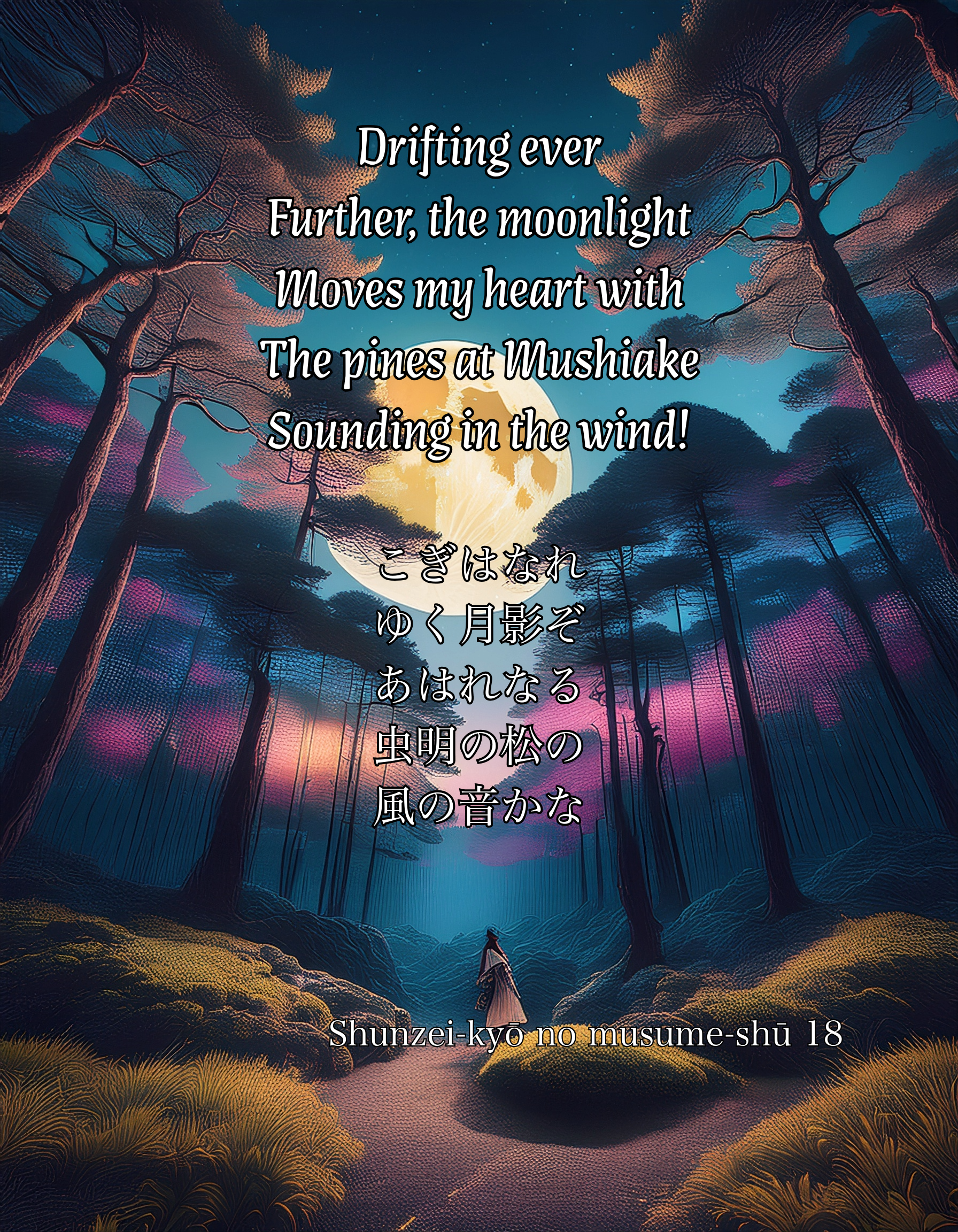
[i] See: Seaways. 何となく心ぞとまるそれとみてこぎはなれゆくむしあけの松 nani to naku / kokoro zo tomaru / sore to mite / kogihanareyuku / mushiake no matsu ‘Somehow, / They linger in my heart / Having seen them / Drifting ever further, / The pines of Mushiake.’ (Shunzei gosha hyakushu 491); From a Fifty Poem Sequence on the Moon. むしあけのせとのしほひのあけがたになみの月かげとほざかるなり mushiake no / seto no shiohi no / akegata ni / nami no tsukikage / tōzakaru nari ‘At Mushiake / Strait the receding tide / At dawn, / The waves carrying the moonlight / Into the distance.’ Yoshitsune (Akishino gesseishū I: 64)
思ひねの夢のうき橋とだえして覚むる枕にきゆるおもかげ
| omoine no yume no ukihashi todaeshite samuru makura ni kiyuru omokage | Filled with love, I slept, but My floating bridge of dreams Is broken: On waking, from my pillow Your face fades away…[i] |
17

[i] See: When he composed a fifty-poem sequence for Cloistered Prince Shukaku. 春のよの夢のうきはしとだえしてみねにわかるゝよこ雲のそら haru no yo no / yume no ukihashi / todaeshite / mine ni wakaruru / yokogumo no sora ‘A Spring night’s / Floating bridge of dreams / Is broken – / Split by the peaks, / The long clouds trail across the sky.’ Fujiwara no Sada’ie (Shinkokinshū I: 38)
みる程ぞしばしなぐさむ歎きつつねぬ夜の空の有明の月
| miru hodo zo shibashi nagusamu nagekitsutsu nenu yo no sora no ariake no tsuki | While gazing on it Briefly am I consoled: Ever grieving After a sleepless night in the sky Hangs the dawntime moon.[i] |
15
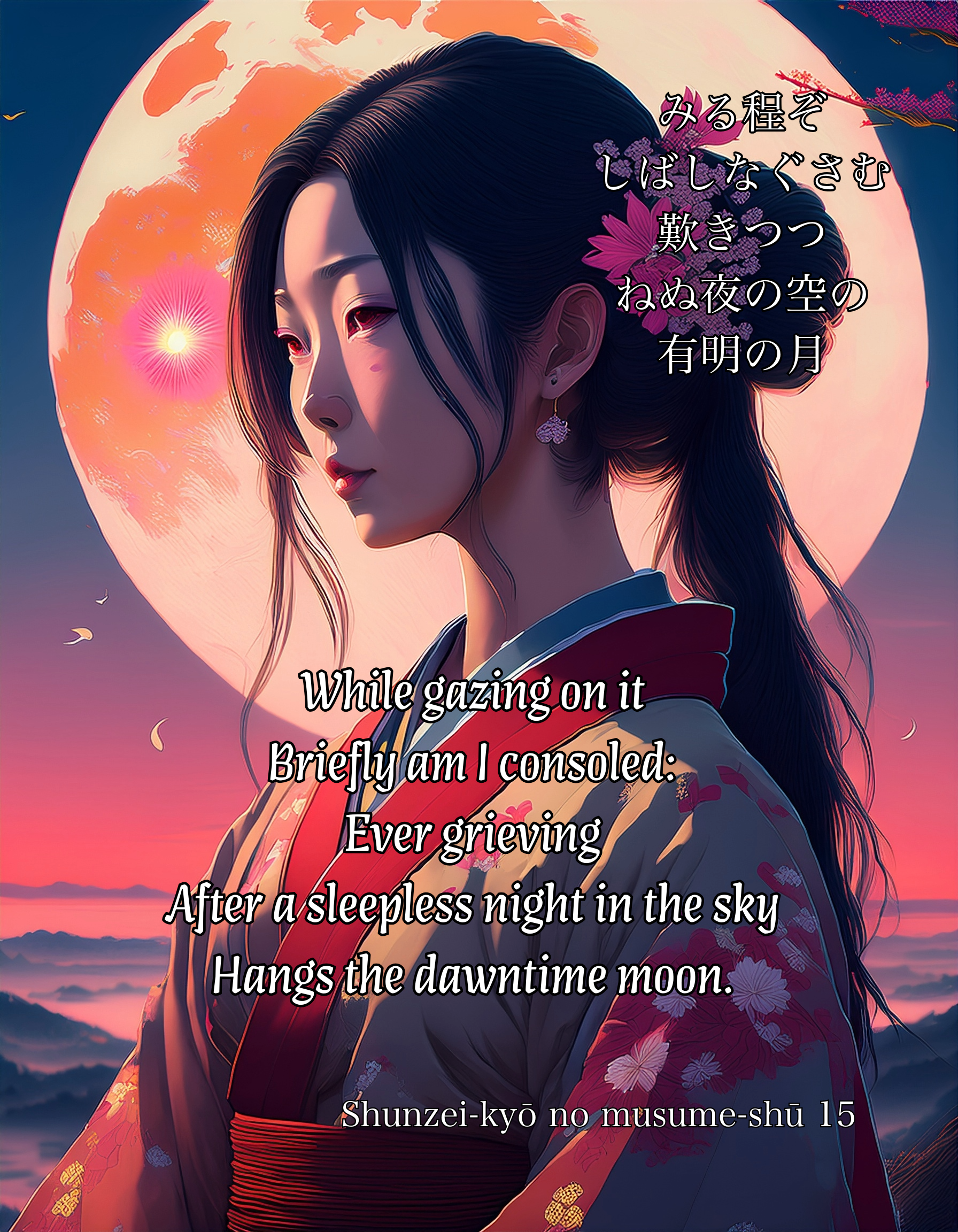
[i] An allusive variation on: 見るほどぞしばしなぐさむめぐりあはん月の都は遥かなれども miru hodo zo / shibashi nagusamu / meguri awan / tsuki no miyako wa / harukanaredomo ‘While gazing on it / Briefly am I consoled: / A meeting will come around once more, / Though the capital as the moon / Is distant…’ Hikaru Genji (Genji monogatari 204)
なつ衣うすくや人の成りぬらんうつ蝉の音にぬるる袖かな
| natsugoromo usuku ya hito no narinuran utsusemi no oto ni nururu sode kana | Summer garb Scanty has he Become, perhaps? An abandoned cicada shell’s sound is Drenched sleeves![i] |
14
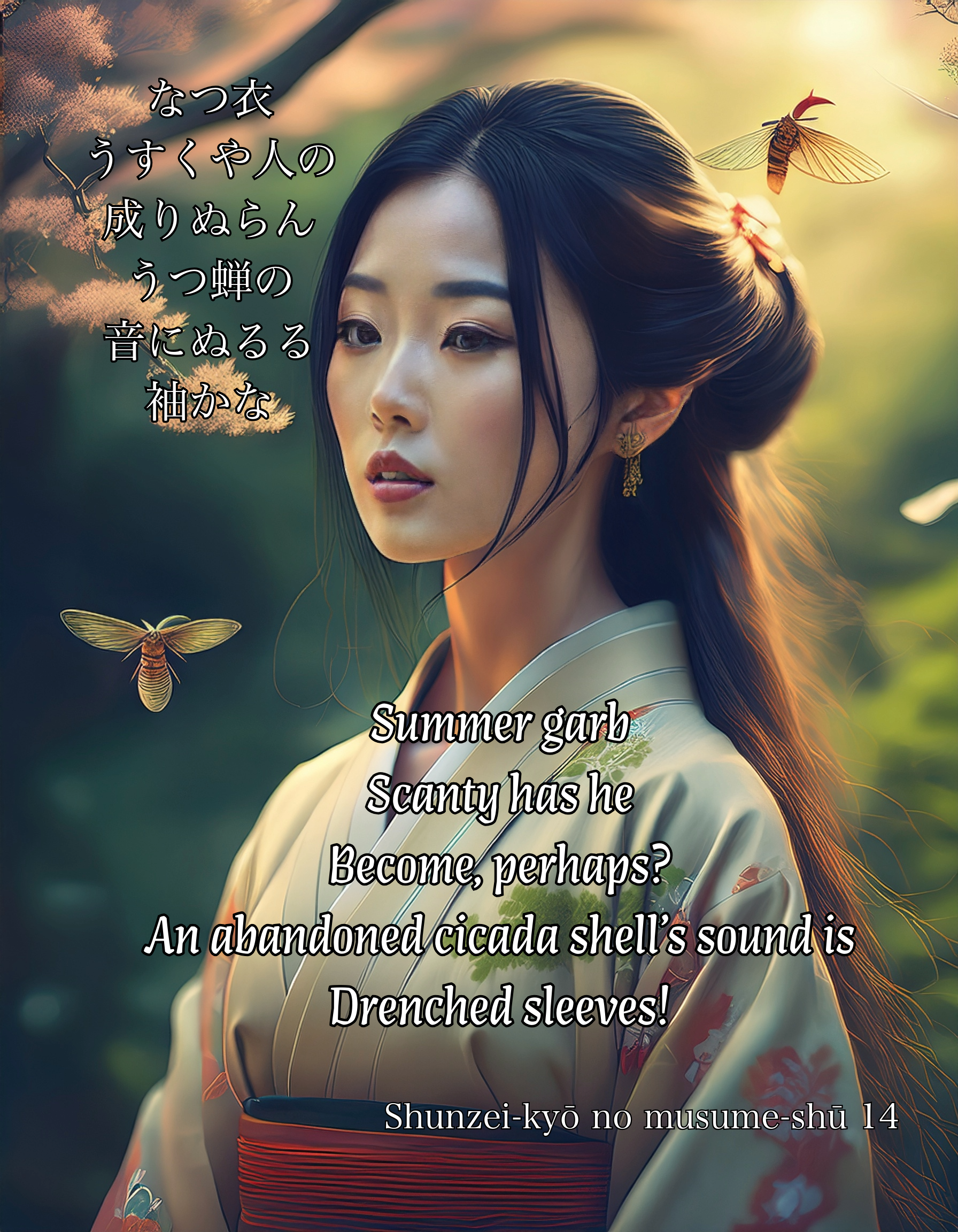
[i] See: 空蝉の羽におく露の木がくれてしのびしのびにぬるる袖かな utsusemi no / ha ni oku tsuyu no / kogakurete / shinobishinobi ni / nururu sode kana ‘Upon an abandoned cicada shell’s / Wings fall dewdrops / Hidden ‘mongst the trees / Secretly, so secretly, / Drenched are my sleeves!’ Utsusemi (Genji monogatari 25)
Love
しらざりき結ばぬ水に影みても袖に雫のかかる物とは
| shirazariki musubanu mizu ni kage mitemo sode ni shizuku no kakaru mono to wa | I did not know: Even though in intangible waters I glimpsed your face, Upon my sleeves, droplets Still would cling…[i] |
13
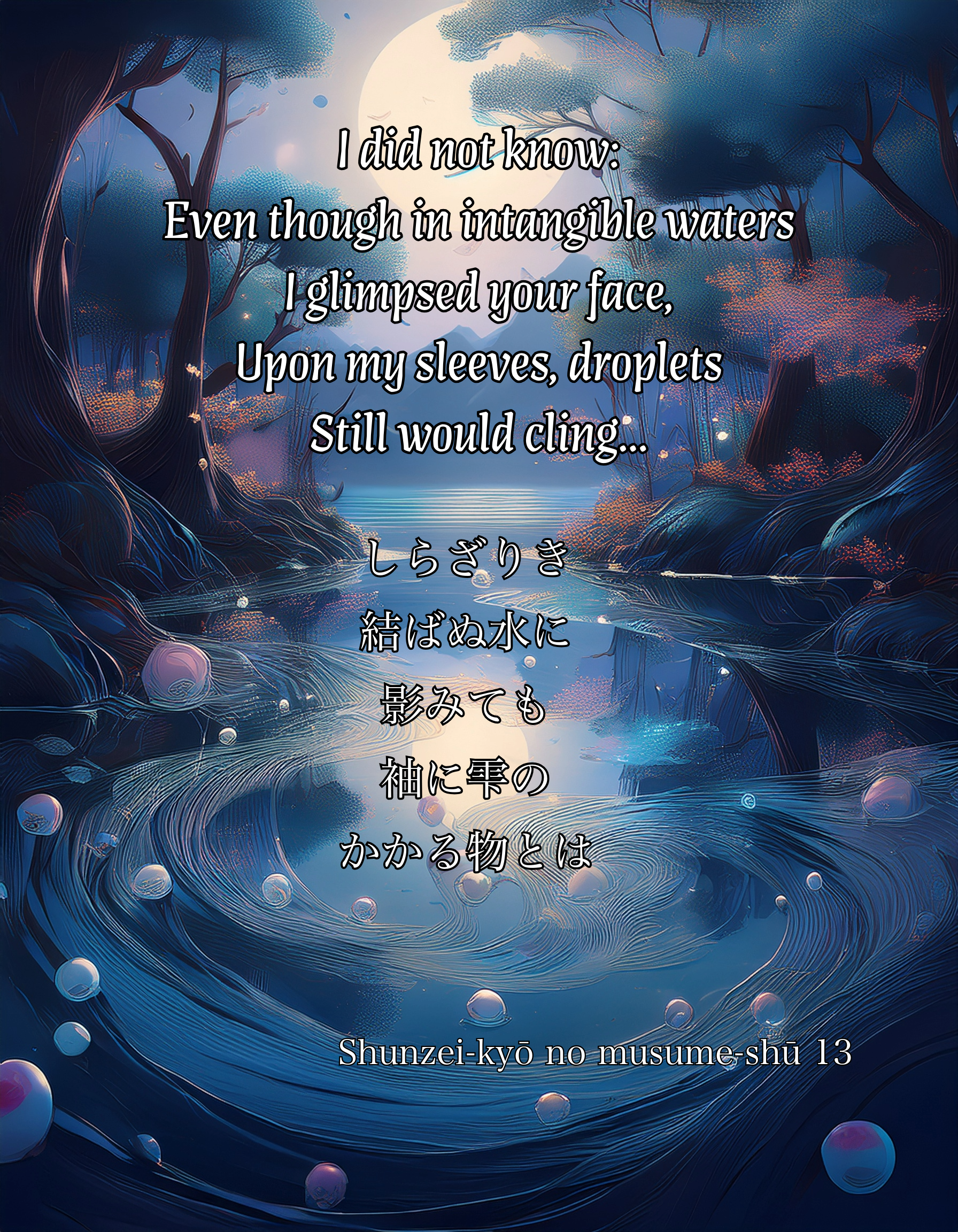
[i] An allusive variation on: Composed on the conception of love, when hundred poem sequences were presented during the reign of former Emperor Horikawa. おもひあまり人にとはばやみなせ川むすばぬ水に袖はぬるやと omoi’amari / hito ni towaba ya / minasegawa / musubanu mizu ni / sode wa nuru ya to ‘Love consumes me and so / I would ask her: / Do the ever dry Minase River’s / Intangible waters / Yet soak your sleeves?’ Major Counsellor Kinzane (Senzaishū XII: 704)