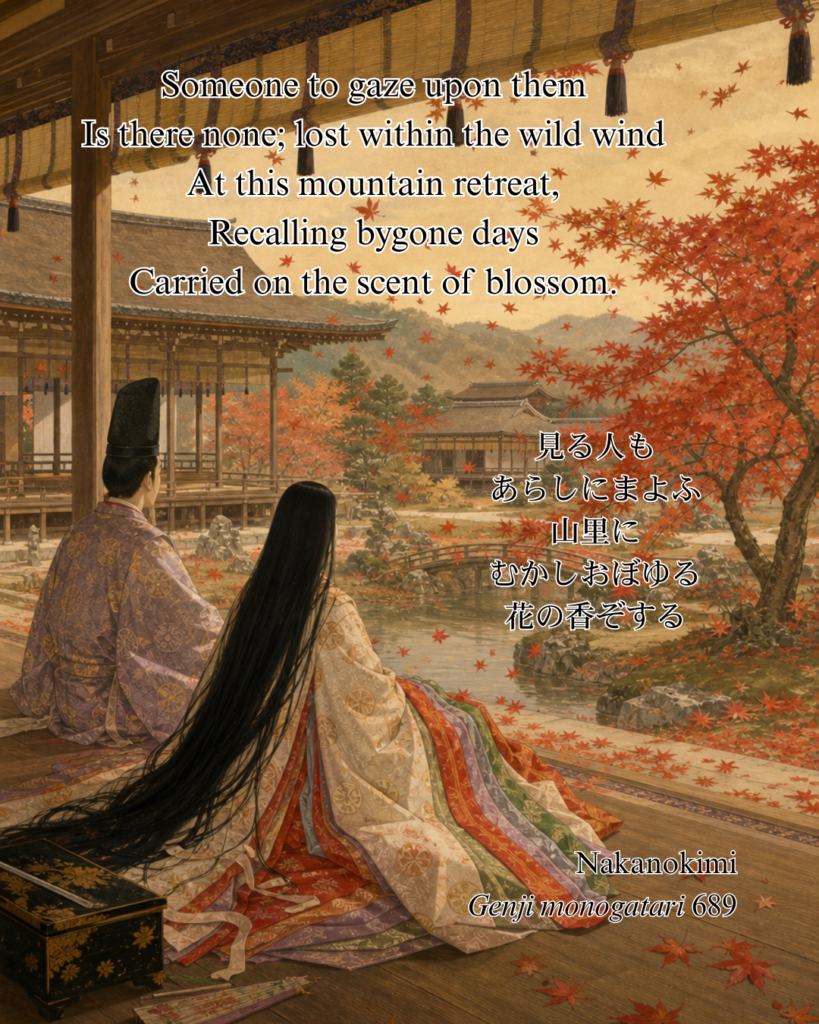
あながちに庭をさへはくあらしかなさこそ心にはなをまかせめ
| anagachi ni niwa o sae haku arashi kana sakoso kokoro ni hana o makaseme | Thoughtlessly Even the garden does sweep The wild wind! That ‘tis its nature so I will entrust the blossom to it! |
129
From the Kitayama Thirty Poem Sequence:[i] Spring.
しる人も嵐にまがふ梅のはな色をも香をも散るにまかせて
| shiru hito mo arashi ni magau mume no hana iro o mo ka o mo chiru ni makasete | Someone to know of them Is there none; lost to the wild wind Are the plum blossoms, Their hue and scent, both, Scattered at its leisure…[ii] |
33

[i] This was a Thirty Poem sequence composed for a meet held by Saionji Kintsune 西園寺公経 (1171-1244) at his residence in Kitayama (near the current site of the Kinkakuji 金閣寺) in Kyoto during the 1230s.
[ii] An allusive variation on: Breaking off a branch of plum blossom, he sent it to a certain person.
君ならで誰にかみせん梅花色をも香をも知る人ぞ知る
| kimi narade tare ni ka misen mume no hana iro o mo ka o mo s hiru hito zo shiru | If not to you Then to whom should I present Plum blossoms? For their shades and their scent both, It is you who know them best of all… |
Tomonori
Kokinshū I: 38
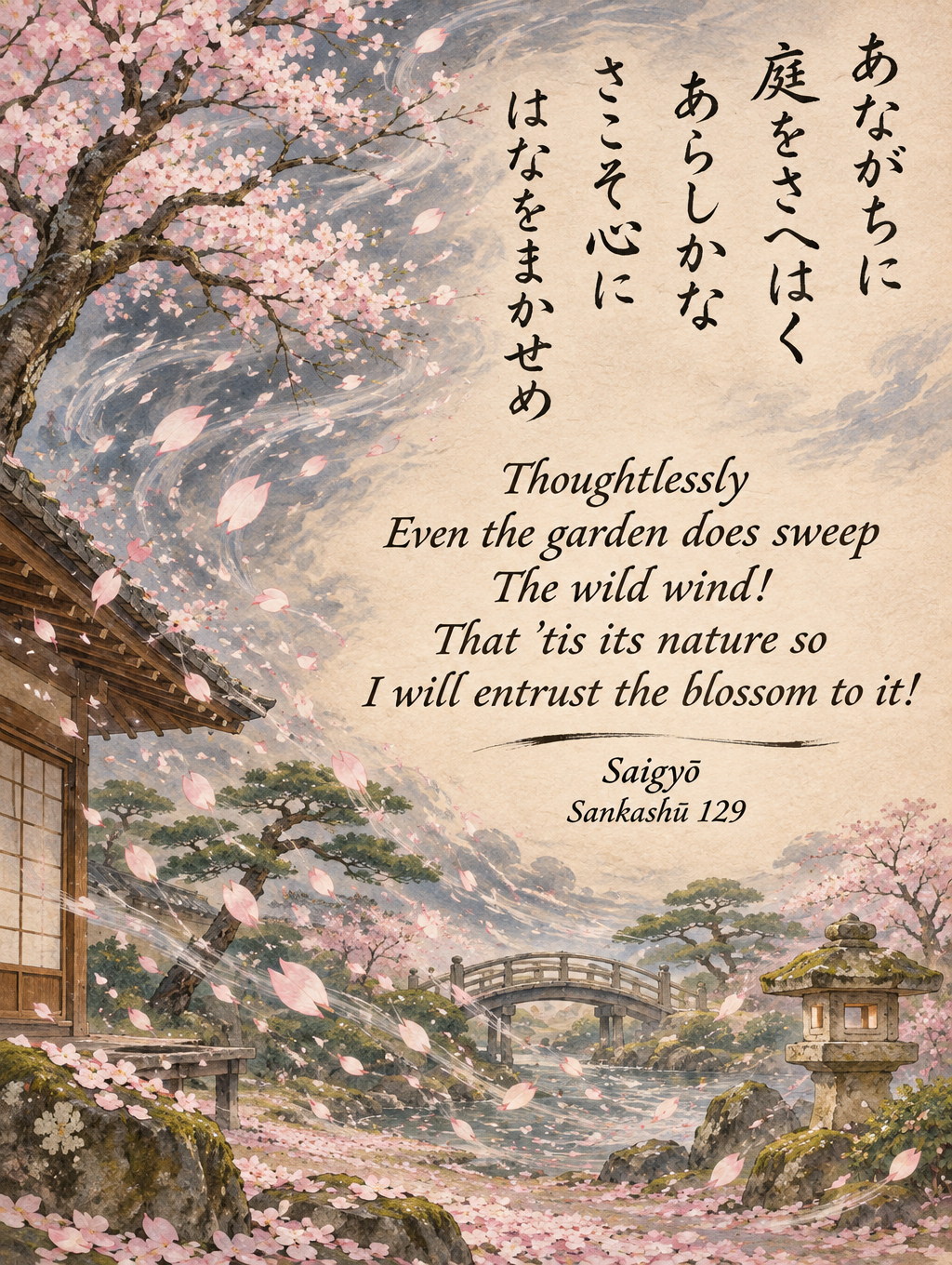
See also: 見る人もあらしにまよふ山里にむかしおぼゆる花の香ぞする
| miru hito mo arashi ni mayou yamazato ni mukashi oboyuru hana no ka zo suru | Someone to gaze upon them Is there none; lost within the wild wind At this mountain retreat, Recalling bygone days Carried on the scent of blossom. |
Nakanokimi
Genji monogatari 689
On the conception of Lingering Cold – Second Month.
みよし野はなほ山さむしきさらぎの空も雪げの残る嵐に
| miyoshino wa nao yama samushi kisaragi no sora mo yukige no nokoru arashi ni | Fair Yoshino’s Mountains still are chill; The Second Month’s Skies, too, have a hint of snow, While the wild wind lingers. |
His Majesty, Former Emperor Go-nijō
Left (Tie).
故郷を出でしにまさる涙かな嵐の枕夢に別れて
| furusato ni ideshi ni masaru namida kana arashi no makura yume ni wakarete |
My home I left in floods Of tears; The wild wind round my pillow Breaks us apart in dreams… |
Lord Sada’ie
899
Right.
東路の夜半の眺めを語らなん都の山にかゝる月影
| azumaji no yowa no nagame o kataranan miyako no yama ni kakaru tsukikage |
Upon the eastern roads All night I turn my gaze – Tell him that, O moonlight, sinking Toward the mountains round the capital! |
Nobusada
900
Both Left and Right say they find no faults.
In judgement: the Left starts with ‘My home I left in floods’ (furusato ni ideshi ni masaru) and concludes with ‘the wild wind round my pillow breaks us apart in dreams’ (arashi no makura yume ni wakarete) – this is a form of words the quality of which I am entirely unable to convey with my own clumsy expressions, but the Right’s ‘O moonlight, sinking toward the mountains round the capital’ (miyako no yama ni kakaru tsukikage) is awash with a sense of tears, so it is most unclear which should win or lose. Both truly seem to reflect the conception of this topic ‘Love and Travel’ well. The poems have been so good every round that my brush is drenched with this old man’s tears, and I can find no other way to express it.