In a hundred poem sequence.
夏にこそさきかかりけれふぢの花松にとのみも思ひけるかな
| natu ni koso sakikakarikere Fudi no Fana matu ni to nomi mo omoFikeru kana | In summer, above all, Do bloom Wisteria flowers Upon the pine is all I can do Or so I thought! |
Shigeyuki
When former Emperor Reizei was Crown Prince and he instructed him to present a hundred poem sequence.
花の色にそめしたもとのをしければ衣かへうきけふにもあるかな
| Fana no iro ni somesi tamoto no wosikereba koromo kaFe’uki keFu ni mo aru kana | With the blossoms’ hues A’dyed, these sleeves Fill me with regret, so I am loath to change my garb, Indeed, today! |
Minamoto no Shigeyuki 源重之
Round Eleven
The Beginning of Summer[1]
Left (Tie)
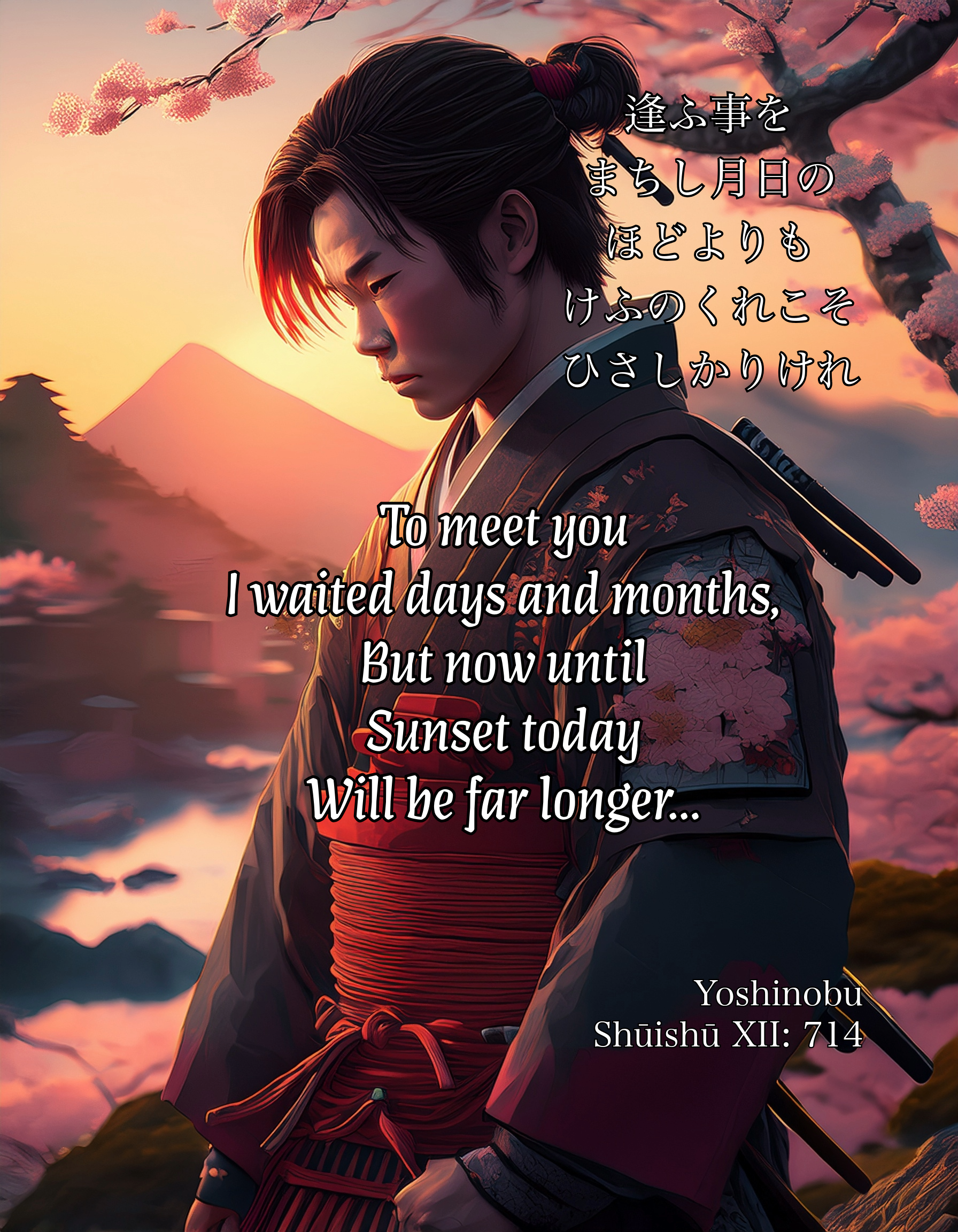
なくこゑはまだきかねどもせみのはのうすきころもをたちぞきてける
| naku koe wa mada kikanedomo semi no ha no usuki koromo wa tachi zo kitekeru | Their buzzing song Is not yet to be heard, yet Cicada wing Light clothing Has been cut to wear today. |
Yoshinobu
22[2]
Right
夏ごろもたちいづるけふは花ざくらかたみのいろもぬぎやかふらん
| natsugoromo tachi’izuru kyō wa hanazakura katami no iro mo nugi ya kauran | Summer garb: Cut out from today, departing The blossom of the cherries’ Hues—a keepsake—, too, Will I put off and change? |
Nakatsukasa
23
The Left’s poem gives the impression of the beginning of summer, but the Right’s ‘Sewn from today, departing’ suggests that it is the year that is doing so. In addition, it seems to use ‘put off and change’, and so sounds as if time has passed more swiftly than in the Left’s poem. Thus, because the poems’ quality is about the same, I make this a tie.
[1] Shuka 首夏. This Sinitic expression was also used to refer to the the Fourth Month.
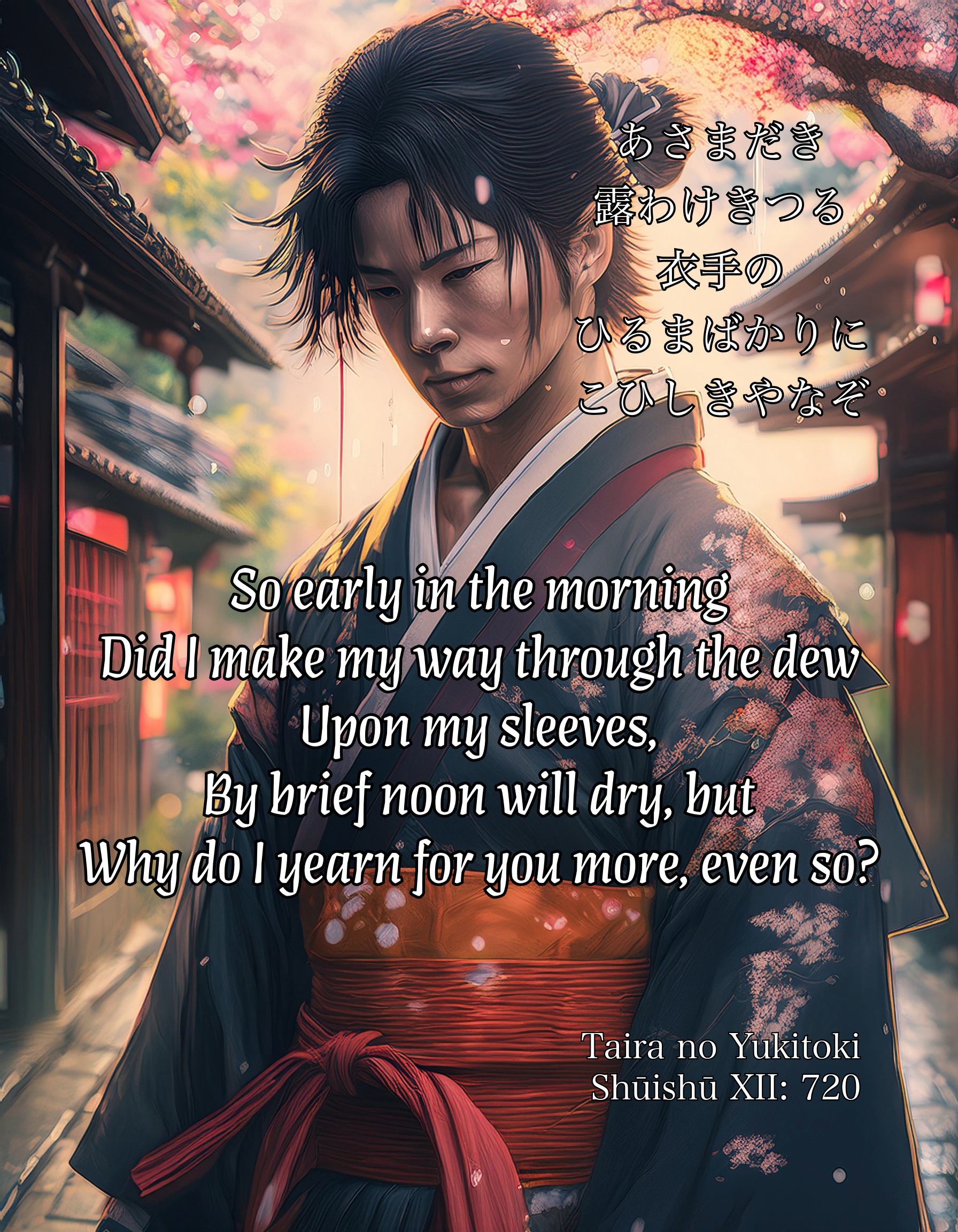
Sent in the morning after he had first visited the Fifth Lady of the Hon’in mansion.
あさまだき露わけきつる衣手のひるまばかりにこひしきやなぞ
| asa madaki tuyu wakekituru koromode no Firu ma bakari ni koFisiki ya na zo | So early in the morning Did I make my way through the dew Upon my sleeves, By brief noon will dry, but Why do I yearn for you more, even so? |
Taira no Yukitoki
For the Poetry Match of Fifteen Love Poems at Minase.
里はあれぬをのへの宮のおのづからまちこしよひも昔なりけり
| sato wa arenu onoe no miya no onozukara machikoshi yoi mo mukashi narikeri | The estate lies in ruins— For the palace at Onoe, Naturally, Those eagerly awaited nights, too, Lie long in the past. |
The Senior Retired Emperor [Gotoba]
When various people had come to see the blossom blooming beautifully at his mountain retreat in Kitashirakawa.
春きてぞ人もとひける山ざとは花こそやどのあるじなりけれ
| Faru kite zo Fito mo toFikeru yamazato Fa Fana koso yado no aruzi narikere | Spring has come, and Folk visiting, too, My mountain retreat: The blossoms are the dwelling’s Master, to be sure! |
Kintō, Captain of the Outer Palace Guards, Right Division
When he was travelling to perform his devotions, he rested beneath some blossoming cherries.
このもとをすみかとすればおのづからはなみる人となりぬべきかな
| ko no moto wo sumika to sureba onodukara Fana miru Fito to narinubeki kana | When beneath the trees My dwelling place is, then Without meaning to A blossom-viewing man Have I become, alas! |
His Majesty, Former Emperor Kazan