After a certain lady had set off up to the capital, I composed these and, attaching them to a letter, had it sent to her.
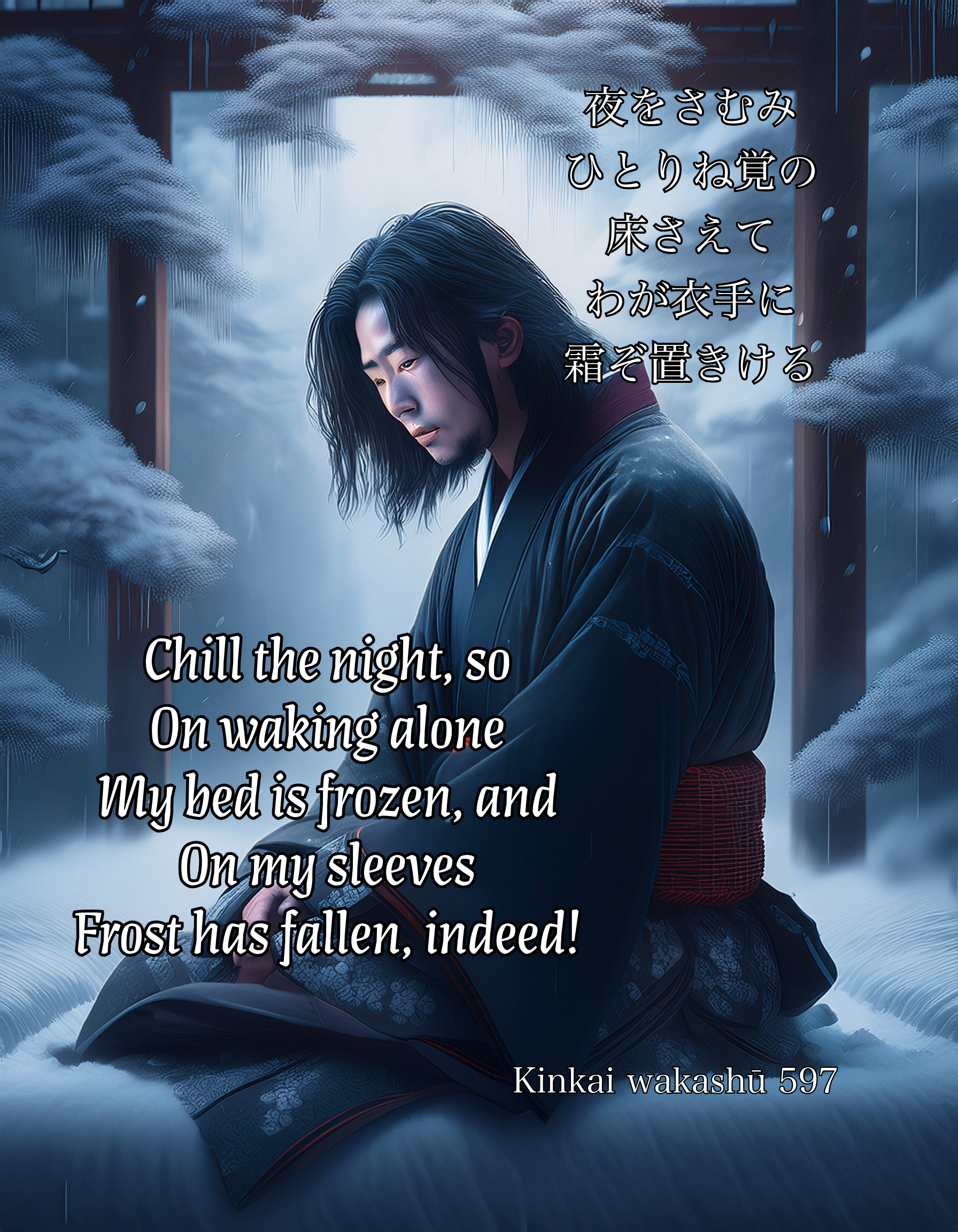
夜をさむみひとりね覚の床さえてわが衣手に霜ぞ置きける
yo o samumi hitori nezame no toko saete wa ga koromode ni shimo zo okikeru
Chill the night, so On waking alone My bed is frozen, and On my sleeves Frost has fallen, indeed![i]
597
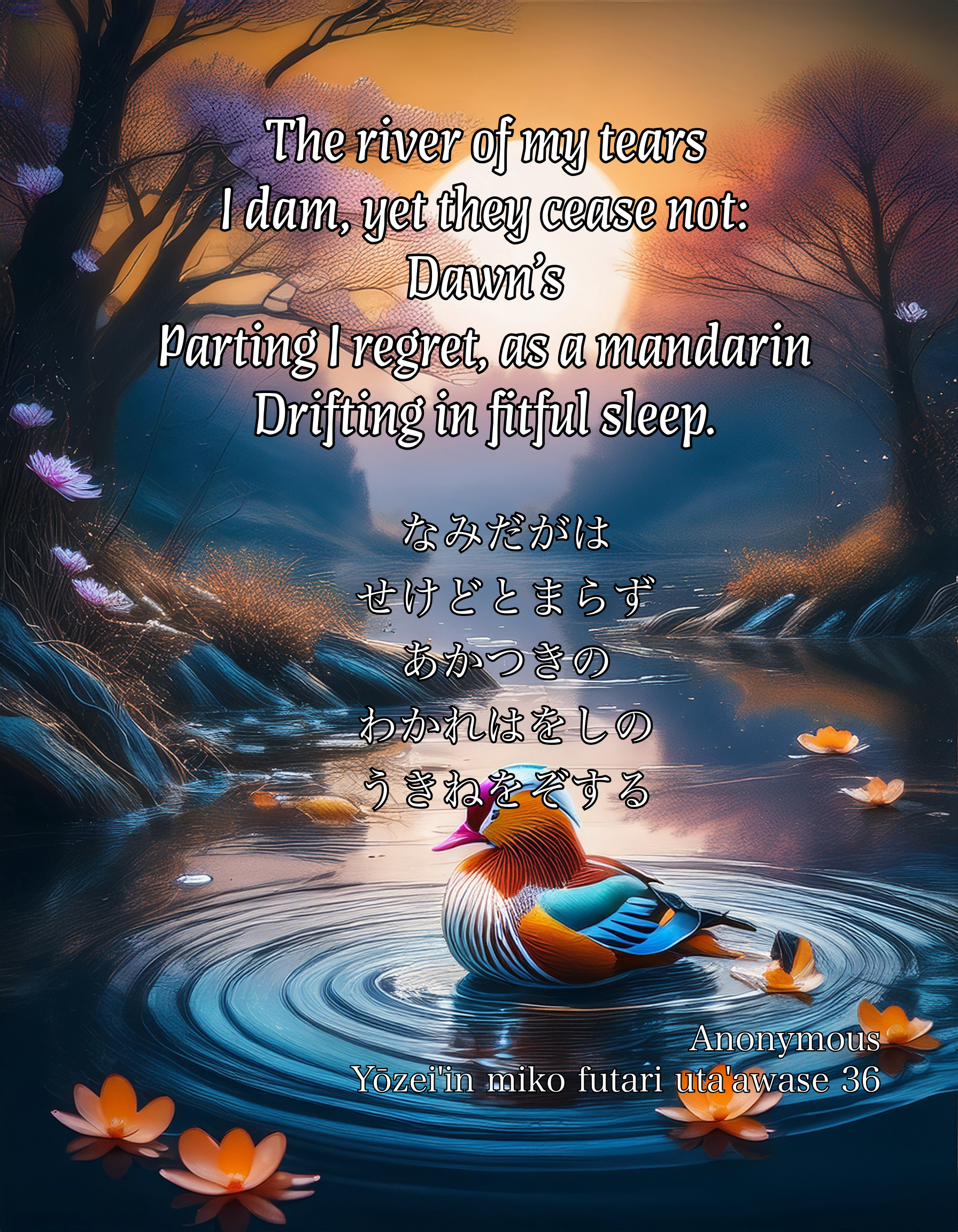
[i] See: Topic unknown. 夜をさむみねざめてきけばをしぞなく払ひもあへず霜やおくらん yo o samumi / nezamete kikeba / oshi zo naku / harai mo aezu / shimo ya okuran ‘Chill the night and / On waking, I hear / A mandarin drake a’crying / For he cannot brush away / The fallen frost, it seems.’ Anonymous (Gosenshū VIII: 478)
The scent of orange blossom incense on the breeze[i]
Left
ふくかぜに花たちばなぞにほふなるむかしのそでにあやまたれつつ
fuku kaze ni hanatachibana zo niou naru mukashi no sode ni ayamataretsutsu
With the gusting breeze Orange blossom’s Fragrance comes— For those sleeves of bygone days Do I ever mistake it…
13
Right
つねよりもことにもあるかなけふをまつはなたちばなのかぜのにほひは
tsune yori mo koto ni mo aru kana kyō o matsu hanatachibana no kaze no nioi wa
More than ever So special it is! For today have I awaited, Orange blossom’s Scented breeze…
14
In general, orange blossom is scented during early summer showers or has its fragrance carried on the evening breeze, so I wonder about the folk of bygone days: there’s nothing to compare it with, making the Left’s poem as hackneyed as one on Isonokami, yet there’s nothing special about it, like a weed growing under the eaves. The Right’s poem has ‘for today have I awaited’, which I think requires a reference to sweet-flags. My overall impression of both poems is that their conceptions are unclear.